唐三彩 : 西洋世界における中国の宝物
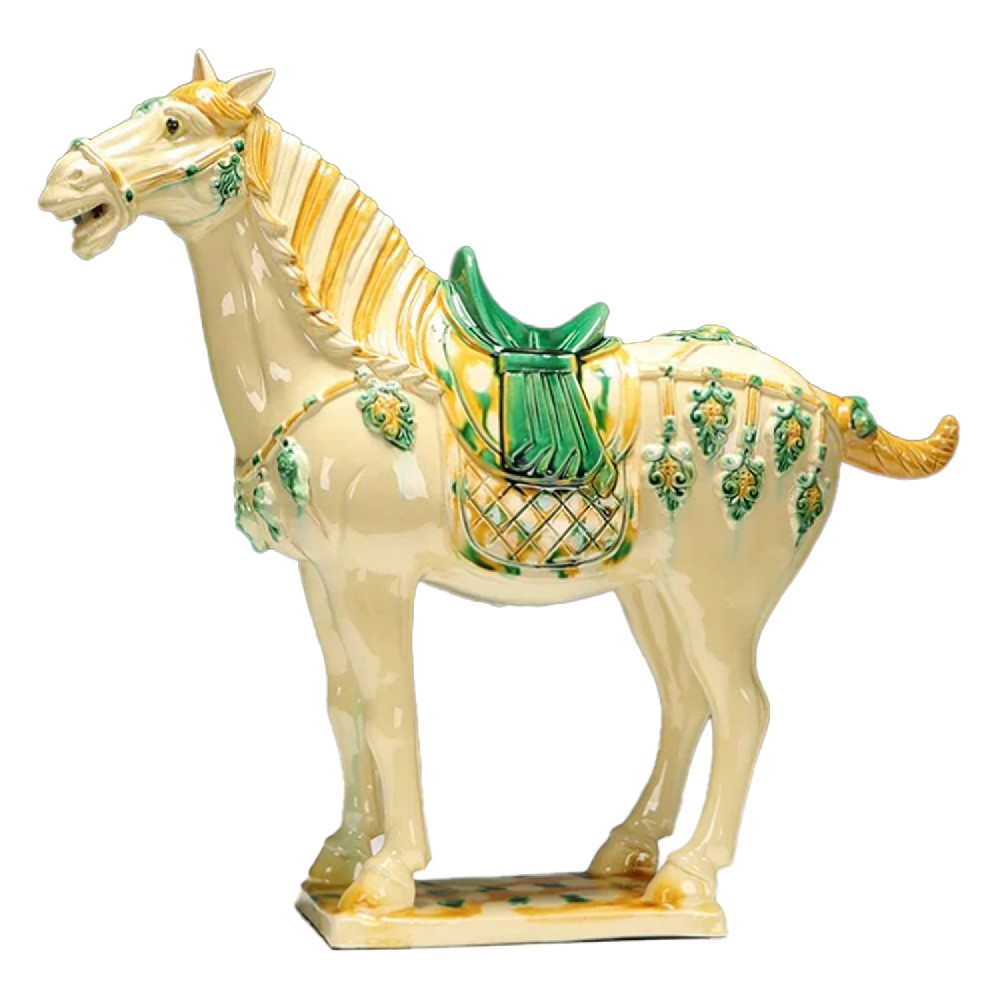
Among the ancient treasures of the British Museum, a group of Tang Sancai (tri‑colored glazed pottery) figures stands in Gallery 33, drawing visitors from around the world. Excavated from the tomb of Liu Tingxun, a Tang Dynasty official, these ceramic camels, horses, and attendants — with their flowing green, amber, and white glazes — have become some of the most beloved Chinese artifacts in the Western imagination. From the grand museums of London and New York to private collections across Europe and America, Tang Sancai's journey westward tells a remarkable story of artistic fascination, cultural diplomacy, and enduring influence.
The First Glimpse: How the West Discovered Tang Sancai
The Western discovery of Tang Sancai is relatively recent. Unlike porcelain, which had been exported to Europe for centuries, Tang Sancai — originally created as burial objects for China's elite — remained largely unknown outside East Asia until the early 20th century. The turning point came with major archaeological excavations near Luoyang, China, in the 1900s. These discoveries, which unearthed spectacular examples of Tang Sancai horses, camels, and figures, quickly captured the attention of Western scholars, collectors, and museums.
Early European sinologists and art historians, such as Swedish archaeologist Johan Gunnar Andersson and French scholar Édouard Chavannes, played a crucial role in introducing Tang Sancai to Western audiences. Their publications and lectures sparked immediate interest, and by the 1920s and 1930s, major American and European collectors — including the Rockefellers and the Freers — were actively acquiring these extraordinary ceramics.
Masterpieces in the Great Museums of Europe and America
Today, Tang Sancai occupies a place of honor in the most prestigious museums across Europe and the United States — a testament to its enduring artistic and historical value.
The United Kingdom: The British Museum in London holds one of the finest collections of Tang Sancai outside China. The famous Liu Tingxun tomb group, acquired in the early 20th century, includes towering guardian figures (lokapalas), civil officials, horses, and camels. These pieces are consistently among the most admired objects in the museum's Chinese galleries. The Victoria and Albert Museum in London also houses notable Tang Sancai examples, including a magnificent Bactrian camel that has been featured in numerous publications on Chinese art.
France: In Paris, the Musée national des arts asiatiques-Guimet holds a rich collection of Tang Sancai, reflecting France's long history of scholarship on Chinese art. French collectors and museums were among the earliest in Europe to recognize the artistic significance of Tang Sancai, and the Guimet's collection includes rare examples of cobalt-blue glazed pieces — the most prized variety.
Germany and Switzerland: The Museum für Ostasiatische Kunst in Cologne and the Rietberg Museum in Zurich both maintain significant Tang Sancai holdings, frequently lending pieces to international exhibitions. German scholars made important early contributions to the study of Tang Sancai, including research on the chemical composition of its glazes.
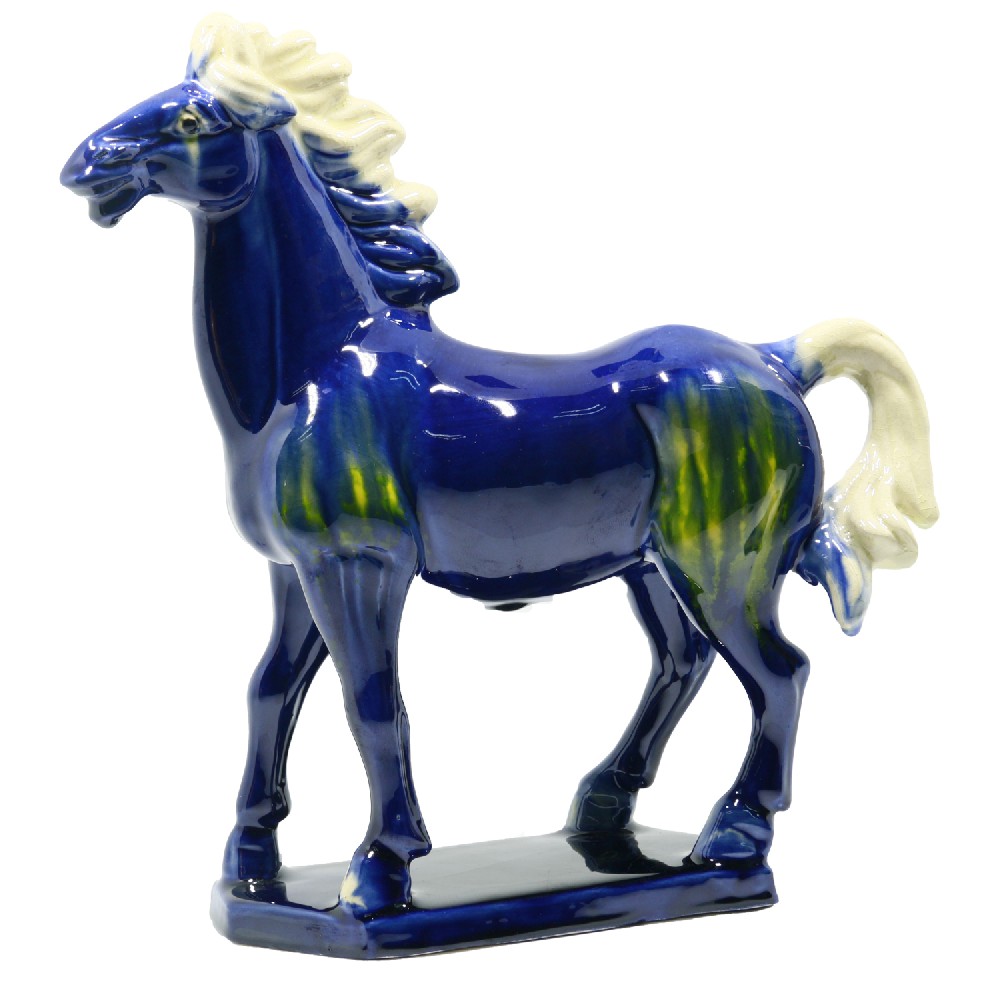
The United States: Across the Atlantic, Tang Sancai is equally treasured. The Metropolitan Museum of Art in New York displays several exquisite examples, including a lively Sancai horse that has become an icon of Tang Dynasty art. The Freer Gallery of Art and the Arthur M. Sackler Gallery at the Smithsonian Institution in Washington, D.C., hold a superb collection, thanks in large part to Charles Lang Freer's early interest in Chinese ceramics. The Museum of Fine Arts, Boston, and the Art Institute of Chicago also feature notable Tang Sancai pieces. In 2014, the Bruce Museum in Greenwich, Connecticut, received a major donation of six Tang Sancai works, including a rare cobalt-blue Bactrian camel and a nearly three-foot-tall guardian figure — a gift the donor hoped would help make the Bruce "a premier research center for Chinese art."
Tang Sancai's Influence on Western Art and Collecting
The arrival of Tang Sancai in Western museums had a profound impact on how European and American audiences understood Chinese art. Unlike the refined, monochromatic porcelain of later dynasties (such as blue-and-white or celadon), Tang Sancai offered something dramatically different: bold, flowing colors, expressive naturalism, and a sense of vibrant, cosmopolitan energy.
Early 20th-century Western modernists, including artists associated with Art Deco, admired the sculptural power and abstract quality of Tang Sancai glazes. The sinuous forms of Sancai horses and the exaggerated features of Central Asian merchant figures resonated with Western interest in non‑Western art forms. Major exhibitions, such as the Royal Academy of Arts' "International Exhibition of Chinese Art" in London (1935–36), introduced Tang Sancai to a broad European public for the first time — an event that transformed Western appreciation of Chinese ceramics.
Living Heritage: Tang Sancai in Contemporary Western Culture
The influence of Tang Sancai is not confined to history. In the 21st century, it continues to captivate Western audiences through museum exhibitions, cultural diplomacy, and contemporary design. In 2024, the exhibition "China: Tang — A Diverse and Open Dynasty (7th–10th Century)" in Leeuwarden, Netherlands, brought 77 Tang artifacts — including exquisite Sancai pieces — to European audiences, using an innovative first-person narrative approach (with Empress Wu Zetian "telling" her own story) to make ancient Chinese culture accessible and engaging.
More recently, at the 2025 Paris International Exposition, a line of Tang Sancai‑inspired products — including miniature "macaron‑colored" Sancai horses — captivated French visitors, demonstrating how traditional craftsmanship can be adapted for modern tastes. In the United States, university museums and cultural institutions regularly feature Tang Sancai in courses on world art, and replicas and inspired designs appear in museum gift shops, home décor catalogs, and even fashion collections.
Conclusion
From the Tang tombs of Luoyang to the great museums of London, Paris, New York, and Washington, D.C., Tang Sancai's journey to the West reflects the power of beauty to transcend time and cultural boundaries. As one of the first Chinese ceramic arts to be systematically collected and studied by Western institutions, it has served as a lasting ambassador of Chinese artistic excellence in Europe and America. Its legacy continues today — not as a relic frozen in history, but as a living tradition that speaks to the openness, creativity, and cosmopolitan spirit that defined the Tang Dynasty and continues to inspire audiences across the Western world.