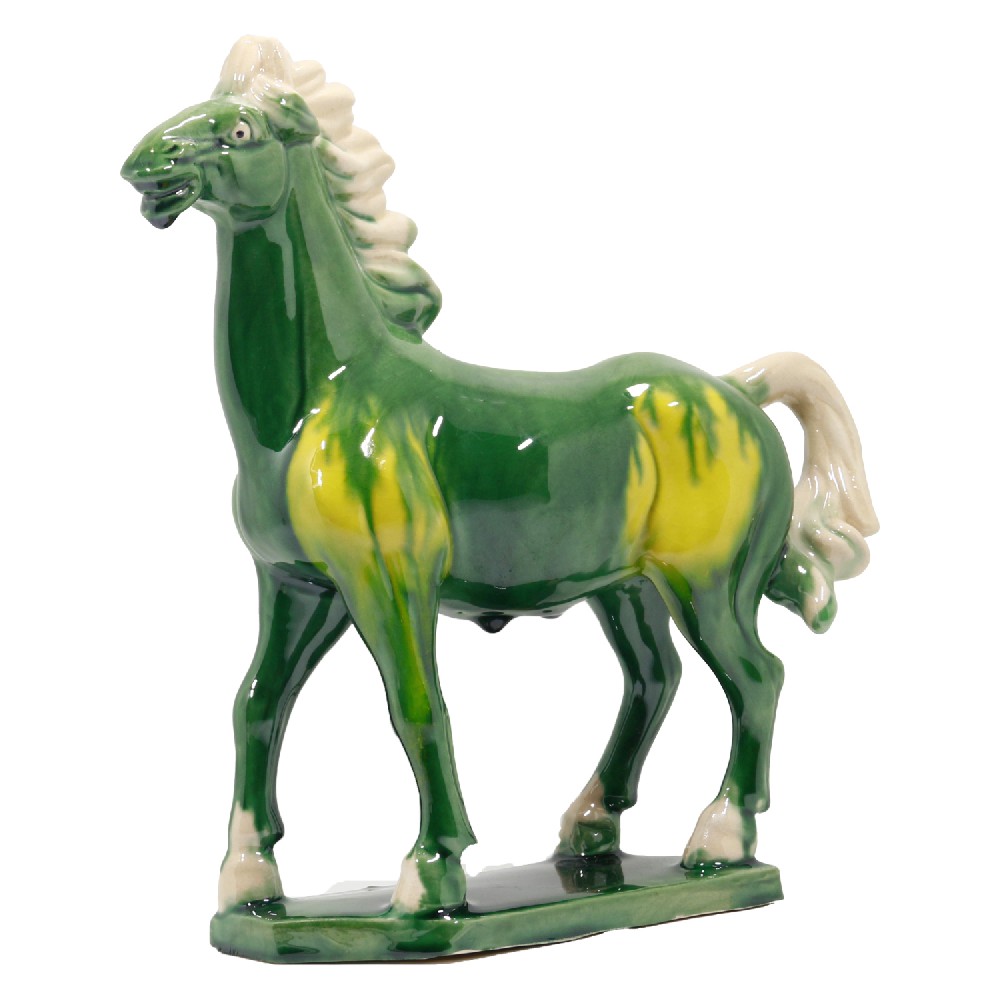
唐三彩 : 中国の陶器宝のグローバル化
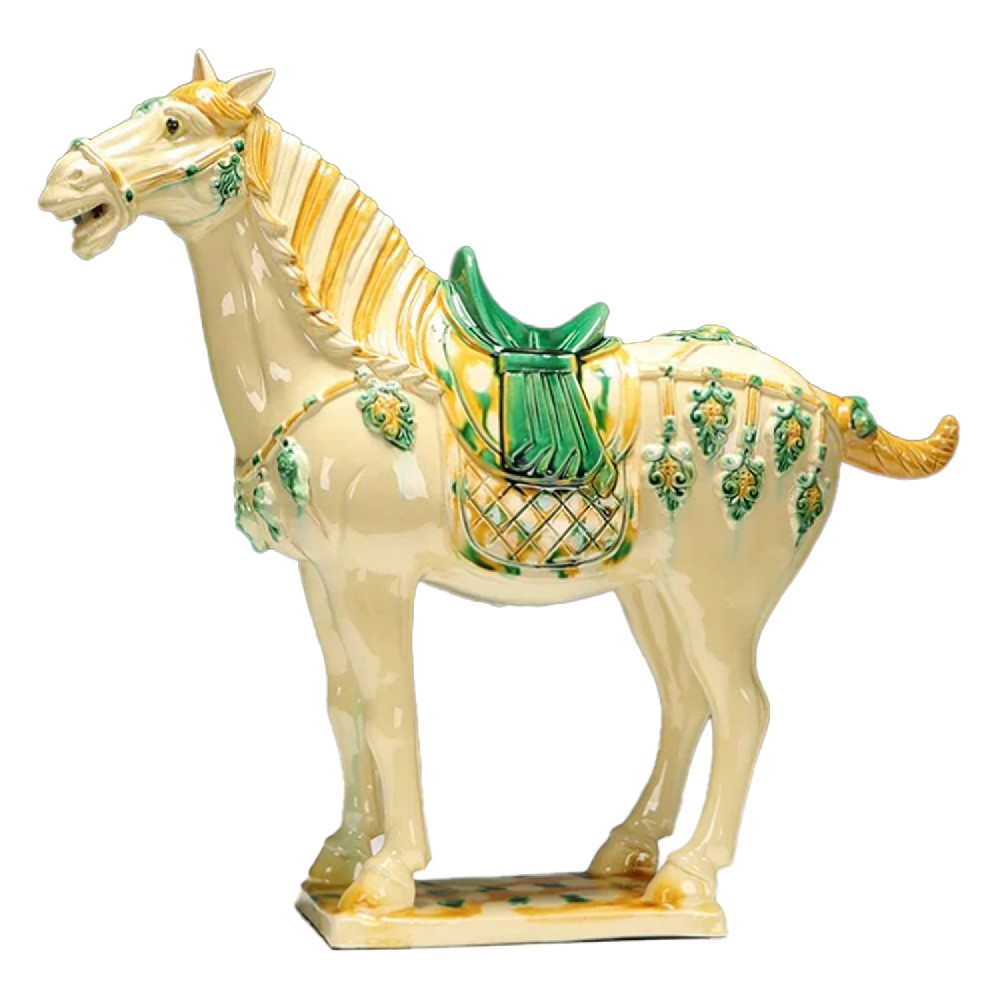
Tang Sancai, or tri-colored glazed pottery of the Tang Dynasty (618–907 AD), represents one of China's most remarkable artistic achievements. But its significance extends far beyond Chinese borders. Over the past century, Tang Sancai has transformed from a little-known Chinese burial artifact into a globally recognized symbol of ceramic art, appearing in the world's greatest museums, inspiring artists across continents, and serving as a cultural bridge between East and West. This is the story of how an ancient Chinese craft went global.
The Silk Road Beginnings: Born Global
Ironically, Tang Sancai's global journey began over 1,300 years ago, during the Tang Dynasty itself. The very creation of Tang Sancai was made possible by international trade. The prized cobalt blue glaze, which gives the rarest Sancai pieces their extraordinary value, was imported from Persia along the Silk Road — giving rise to the saying among Chinese artisans that "blue is noble among the three colors." The iconic forms of Tang Sancai — Bactrian camels with two humps, Central Asian merchants with deep-set eyes and prominent noses, Persian-style flasks — are three-dimensional records of the diverse peoples and goods that traveled the ancient trade routes. In this sense, Tang Sancai was never purely "Chinese" in its inspiration; it was a hybrid art form born from cross-cultural exchange.
The Early 20th Century: International Discovery
For centuries after the Tang Dynasty's fall, Tang Sancai remained largely unknown outside East Asia. Unlike blue-and-white porcelain, which had been exported to Europe in large quantities, Sancai pieces were primarily burial objects, buried in tombs and forgotten. The international awakening began in the early 1900s, when major archaeological excavations near Luoyang, China, unearthed spectacular examples of Tang Sancai.
These discoveries quickly captured the attention of Western scholars, collectors, and museums. Swedish archaeologist Johan Gunnar Andersson and French sinologist Édouard Chavannes published groundbreaking studies that introduced Tang Sancai to European academic circles. By the 1920s and 1930s, major American and European collectors — including Charles Lang Freer (founder of the Freer Gallery of Art in Washington, D.C.) and the Rockefeller family — were actively acquiring these extraordinary ceramics. The 1935–36 International Exhibition of Chinese Art at the Royal Academy of Arts in London marked a turning point: for the first time, a broad Western public saw Tang Sancai in person, and the response was overwhelmingly enthusiastic.
Tang Sancai in the World's Great Museums
Today, Tang Sancai occupies a place of honor in the most prestigious museums across the globe. These institutions not only preserve the artifacts but also shape how the world understands Chinese ceramic art.
In Europe, the British Museum in London holds one of the finest collections outside China, including the famous tomb group of Liu Tingxun — a spectacular array of guardian figures, officials, horses, and camels that never fails to impress visitors. The Musée national des arts asiatiques-Guimet in Paris houses exceptional examples, including rare cobalt-blue pieces. The Museum für Ostasiatische Kunst in Cologne, the Rietberg Museum in Zurich, and the Victoria and Albert Museum in London all maintain significant holdings.
In North America, the collection is equally impressive. The Metropolitan Museum of Art in New York displays exquisite Sancai horses that have become icons of Tang art. The Freer Gallery of Art and the Arthur M. Sackler Gallery at the Smithsonian Institution in Washington, D.C., hold a superb collection assembled by Charles Lang Freer himself. The Museum of Fine Arts, Boston, the Art Institute of Chicago, and the Bruce Museum in Greenwich, Connecticut — which received a major donation of six Tang Sancai pieces in 2014 — all feature notable examples.
In Asia, the Tokyo National Museum, the Idemitsu Museum of Arts in Japan, and the National Museum of Korea in Seoul hold important collections, reflecting the deep influence Tang Sancai had on neighboring ceramic traditions, including Nara Sansai in Japan and Silla Samchae in Korea.
Australia is not left behind: the National Gallery of Victoria in Melbourne and the Art Gallery of New South Wales in Sydney both display Tang Sancai pieces, introducing Australian audiences to this ancient art form.
Global Imitations: The First Widely Copied Chinese Ceramic
One of the strongest measures of Tang Sancai's global influence is the wave of imitations it inspired across Asia — making it arguably the first Chinese ceramic to be widely copied outside China.
In Japan, the Nara Sansai (奈良三彩) tradition emerged directly from Tang influence. Japanese monks and artisans who traveled to China as part of imperial missions brought back not only Buddhist scriptures but also the techniques for making Sancai — including precise glaze recipes and application methods. The resulting Nara Sansai, though distinct in form and primarily used for temple offerings, clearly shows its Chinese ancestry.
In the Korean Peninsula, Silla Samchae (신라삼채) developed under the influence of both Chinese celadon technology and the tri-colored glaze tradition. However, Korean artisans adapted the form to their own cultural needs, typically using Silla Samchae jars to hold the cremated remains of Buddhist monks — a functional variation that demonstrates creative cultural translation.
Even further west, archaeological discoveries in **Iran and Iraq** have revealed that Persian potters created their own "Persian Tri-color" (Persian Sancai) wares, with bolder colors and Arabic inscriptions. The wide distribution of Tang Sancai and its imitations across Asia and the Middle East testifies to its status as a truly international ceramic tradition.
Cultural Diplomacy: Tang Sancai as Ambassador
In the 21st century, Tang Sancai has become an important tool for cultural diplomacy. Recognizing its universal appeal, China has sent Sancai treasures to exhibitions around the world, building cross-cultural understanding through art.
In 2024, the exhibition "China: Tang — A Diverse and Open Dynasty (7th–10th Century)" in Leeuwarden, Netherlands, brought 77 Tang artifacts — including exquisite Sancai pieces — to European audiences. The exhibition used an innovative first-person narrative, with Empress Wu Zetian "telling" her own story, making ancient Chinese culture accessible and engaging for Western viewers.
Also in 2024, the Asian Art Museum in San Francisco hosted a major exhibition titled "Tang Sancai and the Silk Road", which traced the global journey of these ceramics and their enduring influence. The exhibition traveled to several North American venues, reaching hundreds of thousands of visitors.
At the 2025 Paris International Exposition, a range of Tang Sancai-inspired products — including a popular line of "macaron-colored" miniature Sancai horses — captivated French audiences, demonstrating how traditional craftsmanship can be adapted for contemporary global markets.
Living Heritage: Global Recognition and Revival
In 2008, the Tang Sancai firing technique was added to China's National Intangible Cultural Heritage list — a recognition that has helped preserve and promote the craft. But globalization has not meant fossilization. Master artisans like Gao Shuiwang, a national-level inheritor of this heritage, have dedicated their lives to reviving lost techniques while also innovating for contemporary tastes. The British Museum's experts have praised his work as "not a restoration of a technique, but a dialogue with civilization."
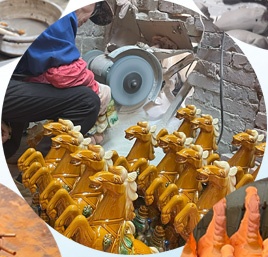
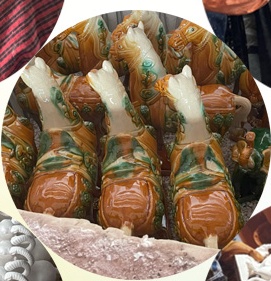
Today, Tang Sancai is not only preserved in museums but also produced for global markets. Artisans in Luoyang, the birthplace of Tang Sancai, create everything from faithful reproductions for collectors to modern designs — tea sets, lamps, jewelry, and ornaments — that appeal to international consumers. Some pieces are even sold as brand-name blind boxes, directly appealing to a generation raised on collectible toys. A satisfaction survey for these modern products scored an average of 9.69 out of 10, demonstrating that the ancient art form continues to resonate with contemporary audiences worldwide.
Conclusion: A Timeless Global Treasure
From its origins as a burial object in Tang Dynasty China to its current status as a global artistic treasure, Tang Sancai has traveled an extraordinary journey. It is a testament to the power of art to transcend cultural boundaries, to inspire imitation and innovation, and to connect people across time and space. As the first Chinese ceramic to be widely copied around the world — from Japan and Korea to Persia — Tang Sancai pioneered a model of global cultural exchange that continues to this day. Whether displayed in the British Museum, the Metropolitan Museum of Art, the Tokyo National Museum, or a contemporary design shop in Paris, Tang Sancai remains a vibrant, living tradition — a true citizen of the global art world, and a luminous ambassador of Chinese cultural heritage.