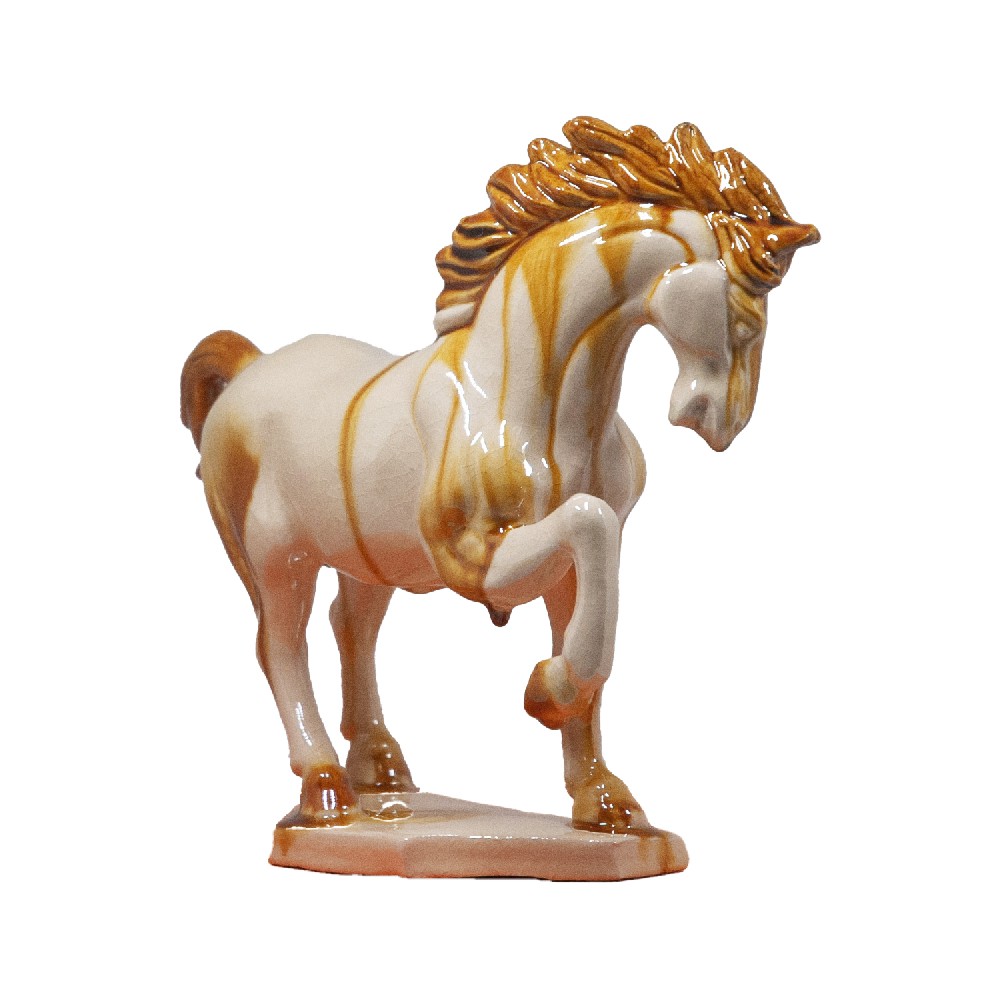
Tang Sancai: The Glazed Epic of a Golden Dynasty
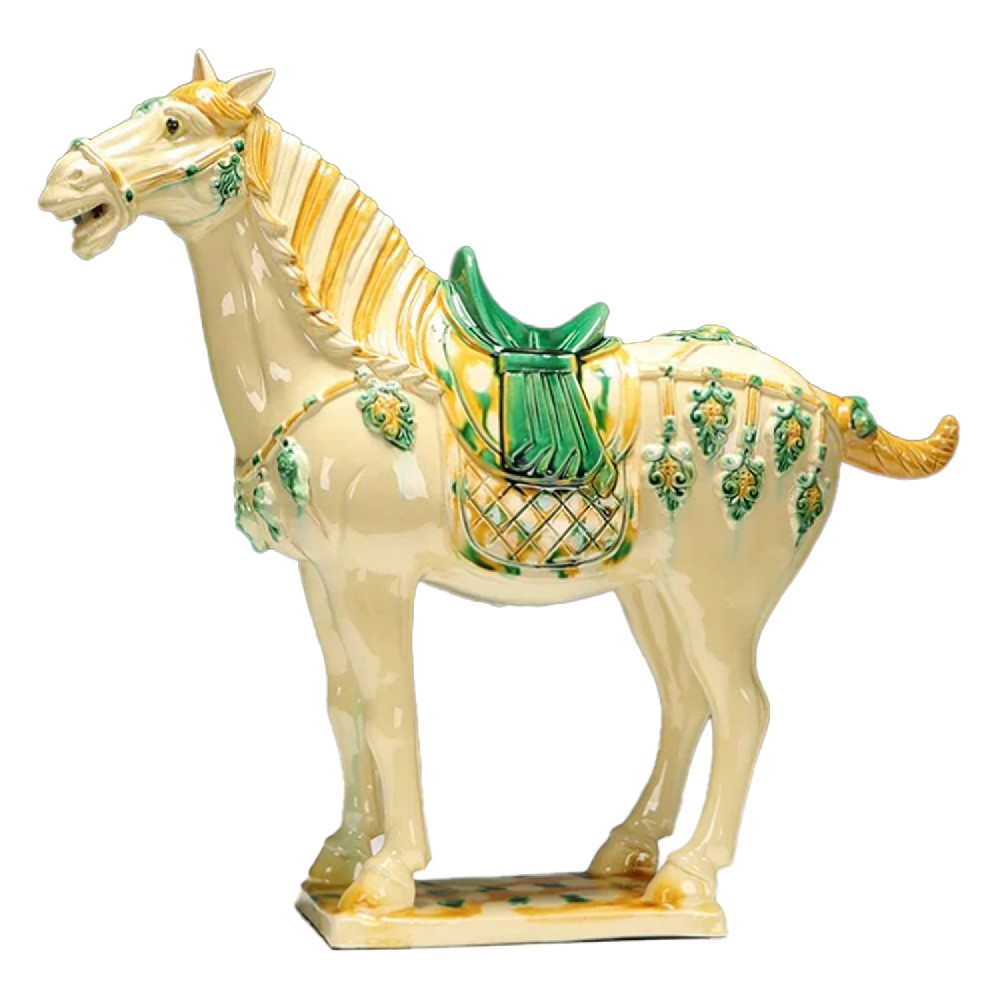
In the exhibition hall of the Luoyang Museum, a tri-colored glazed horse whinnies silently, its body flowing with hues of green and amber as if ready to break free from its glass case. Unearthed from the Tang Gongling tomb, this artifact froze the energy of a millennium ago in its flowing glaze. As a unique artistic symbol in the history of Chinese ceramics, Tang Sancai (lit. 'Three Colors of the Tang') is not only the pinnacle of low-temperature lead-glaze technology but also a mirror reflecting the cosmopolitan spirit of the Tang Dynasty (618–907 AD).
The Cradle of a Craft
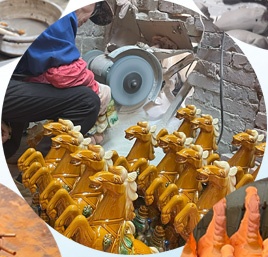
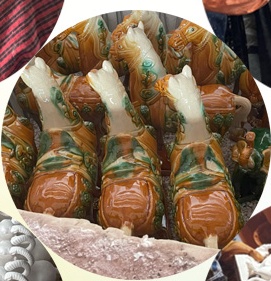
The 7th-century capital of Chang’an, described as a city of "gold and silver palaces," fostered a unique funerary culture. The belief among nobles in "treating death as life" created a full-fledged industry for the production of *mingqi* (grave goods). Excavations at the Huangye kiln site in Luoyang reveal the use of modular production, with different artisans shaping horse heads, saddles, and figures. This assembly-line approach not only improved efficiency but also standardized forms.
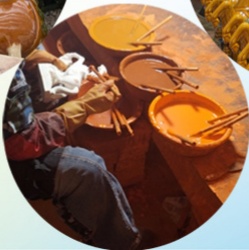
A breakthrough in glaze formulation made the tri-colored effect possible. By blending metal oxides like copper, iron, and cobalt into a lead glaze, Tang potters achieved the iconic interplay of yellow, green, and white after firing at a low temperature of around 800°C (1472°F). The mastery of a two-stage firing process—first the unglazed body, then the glaze—allowed for perfect fusion, creating a ceramic decoration technique unique in the world.
A Frozen Epic in Liquid Glaze
The sculptural repertoire of Tang Sancai is a treasure trove. The figurine of a Sogdian merchant leading a Bactrian camel is a three-dimensional scroll of Silk Road civilization. The deep-eyed, prominent-nosed merchant, wearing a pointy felt hat and holding a Persian silver flask, with his camel carrying silk rolls and exotic ewers, vividly captures commercial life. The famous 'Camel Carrying Musicians' figurine, with Central Asian musicians playing the *bili* (a double-reed flute) and pipa on camelback, freezes a moment of Chang'an's vibrant cultural mix.
The fluidity of the glaze breaks the boundaries of static sculpture. On a female figurine unearthed in Luoyang, the jade-green glaze naturally flowing down her dress forms water-like ripples that blend with her yellow-glazed stole, reminiscent of the fluid brushstrokes of the great painter Wu Daozi. This "kiln transmutation" elevates ceramic craftsmanship to a new expressive realm.
A Dialogue Across Time and Space
The discovery of Tang Sancai fragments at the Samarra site in Iraq and the Fustat ruins in Egypt confirms the flourishing maritime Silk Road. These funerary objects became special cultural ambassadors, spreading Tang aesthetics to the Islamic world. Persian potters, imitating Tang Sancai, created "Persian Tri-color" wares with bolder colors and Arabic inscriptions, forming a distinct artistic variation.
In contemporary art, the legacy of Tang Sancai persists. French ceramicist Charles Lapicque deconstructed its glaze colors, creating abstract symphonies on ceramic installations—a cross-cultural dialogue echoing the sounds of ancient Silk Road caravans.
Standing before a Tang Sancai display, the mottled glazes still whisper stories of Chang'an. They are not cold burial objects but a three-dimensional chronicle of the Tang's golden age—an age that dared to embrace the foreign while staying rooted in its own tradition. When the cobalt blue in a tri-colored horse's eye meets our gaze across a thousand years, we see not just artistic mastery but the confidence and openness of a great civilization in its moment of cultural fusion.