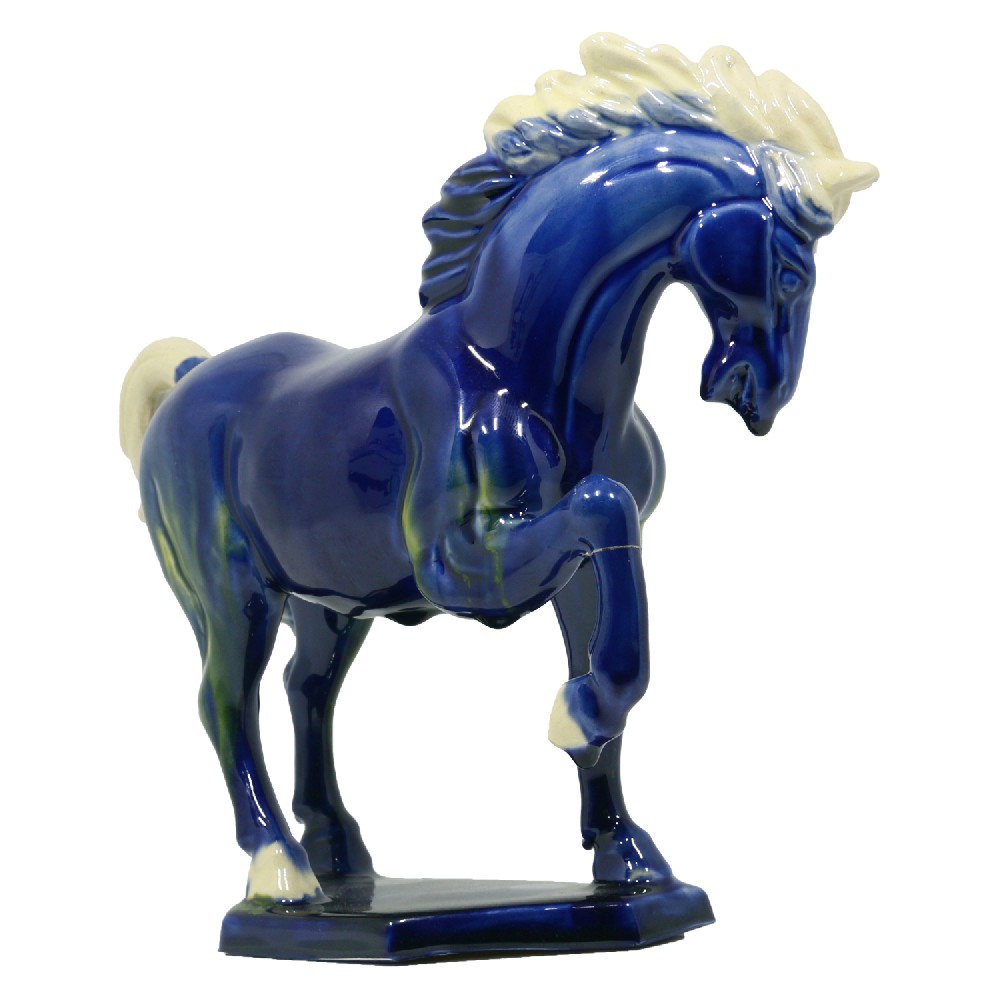
Tang Sancai: The Modern Renaissance of an Ancient Craft
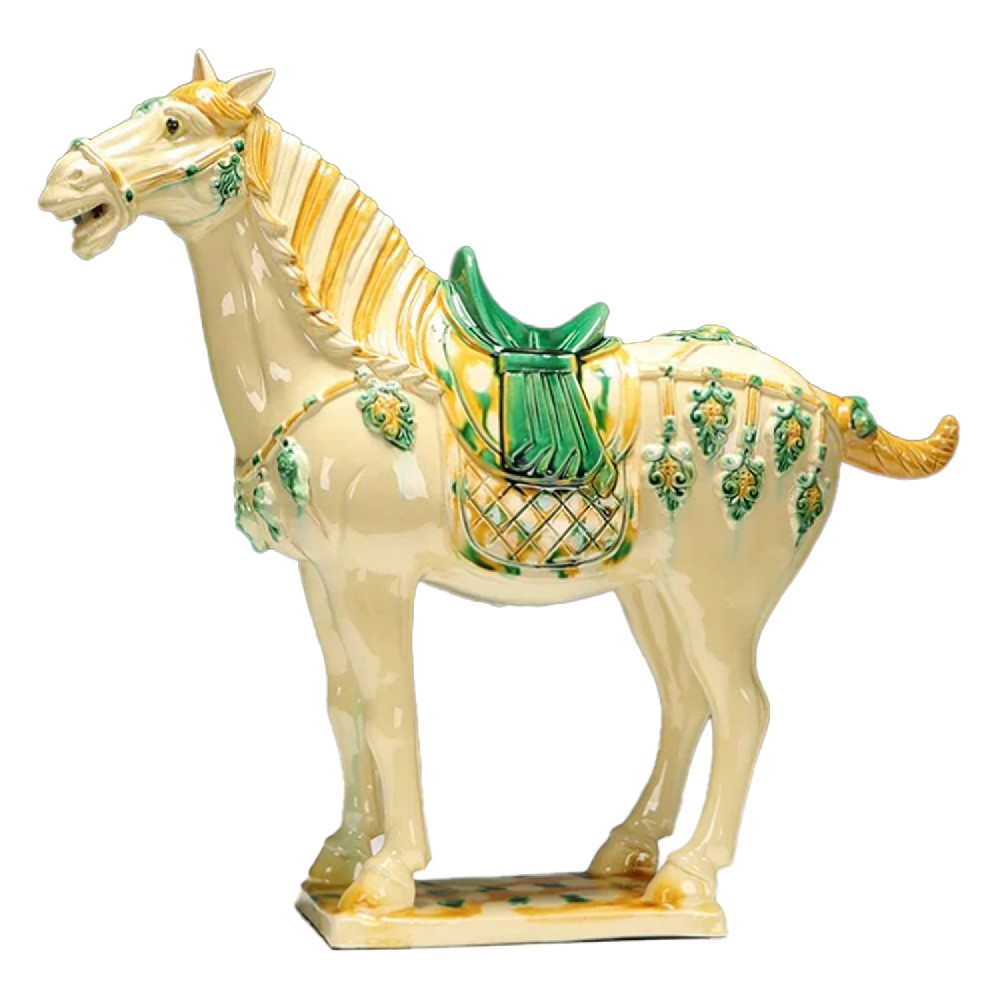
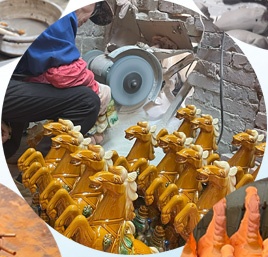
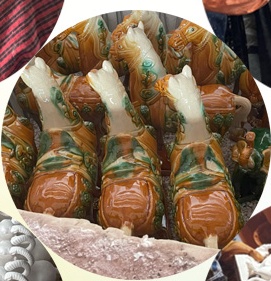
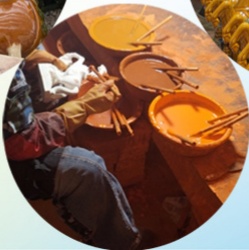
In a workshop on the outskirts of Luoyang, a young artisan carefully brushes green, amber, and white glazes onto a ceramic horse. Unlike the majestic steeds of the Tang Dynasty (618–907) — known for their powerful bodies and refined sculptural lines — this horse has rounded features and a playful, almost cartoonish expression. It will sell to a young collector who discovered Tang Sancai through a blind box. This is not a scene of loss or dilution, but of a remarkable transformation: an ancient Chinese craft adapting and thriving in the 21st century .
The story of modern Tang Sancai is, in many ways, a story of resurrection. The original Tang Sancai — the iconic tri-colored glazed pottery of horses, camels, and court ladies — flourished as funerary objects, reflecting the cosmopolitan spirit and prosperity of the Tang court. However, after the dynasty's fall, the specific kilns and techniques faded into history for centuries . The modern era of Tang Sancai began just over a hundred years ago. It was in the early 20th century, with major archaeological discoveries on Mang Mountain in Luoyang, that the world was re-introduced to this "lost" art. The villagers of Nanshishan, using their existing knowledge of traditional glazed tile-making, began the painstaking work of repairing and copying the unearthed relics .
Innovation Born from Tradition
By the 1980s, this practice blossomed into a thriving industry, making traditional Tang Sancai a representative art form of the Luoyang region . But the craft faced a new crisis at the turn of the millennium: a decline in production, a lack of young inheritors, and products that no longer resonated with the modern market .
This very crisis sparked the current renaissance. Artisans realized that for the "kiln fire" to survive, they could not simply replicate the past. The core challenge of modern Tang Sancai is to balance heritage with innovation . This has led to a burst of creativity across multiple dimensions:
Technical and Material Innovation: While some still use traditional clay, many modern workshops have introduced lighter, stronger stone-plastic clay. This not only reduces the weight and fragility of the pieces — making them easier for tourists to carry — but also allows for new forms .
Aesthetic Evolution: Perhaps the most visible change is in style. While master inheritors like Gao Shuiwang painstakingly recreated the powerful, classic Tang horse, his son, Gao Zhe, understands that contemporary audiences prefer forms that feel "rounder and more cartoon-like" . The palette is also expanding far beyond the classic yellow, green, and white. Modern artisans use a wider range of soft tones and rich colors, creating a fresh visual language. One 27-year-old inheritor, Cheng Guo, specializes in "Sancai murals" (tri-colored glazed pottery printmaking), creating flat, artistic wall pieces that are far more suited to modern apartments than ancient tomb figures .
New Forms for New Markets: The most dramatic shift is in product design. Artisans are no longer just making figurines. They are creating practical products for daily life, from tea sets and lamps to jewelry and ornaments . In a move that bridges centuries, one line of modern Tang Sancai figures is even packaged and sold as brand-name blind boxes, directly appealing to a generation raised on collectible toys. The results are impressive: a satisfaction survey for these new products scored an average of 9.69 out of 10 .
A Legacy in Color
This rejuvenation was formally recognized in 2008 when the Tang Sancai firing technique was added to China's National Intangible Cultural Heritage list . This status doesn't freeze the craft in time; it provides a platform for its evolution.
Today, walking through a modern Tang Sancai studio, you are as likely to see a set of elegant coffee mugs with the signature flowing glaze as you are a traditional horse and camel. You might see the ancient craft applied to fashion design or contemporary art installations . The artisans are no longer just inheritors; they are designers, entrepreneurs, and cultural ambassadors.
The modern story of Tang Sancai is a powerful one. It is a testament to how an ancient art form can not only survive but flourish, not by being preserved under glass, but by adapting its core essence — its love of color, form, and exquisite craftsmanship — for a new era. It is a reminder that true cultural heritage is a living thing, and its colors continue to flow, as vibrant today as they were over a thousand years ago.