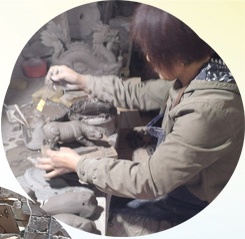
The Craft of Tang Sancai (Part 1) – Material Selection and Clay Preparation
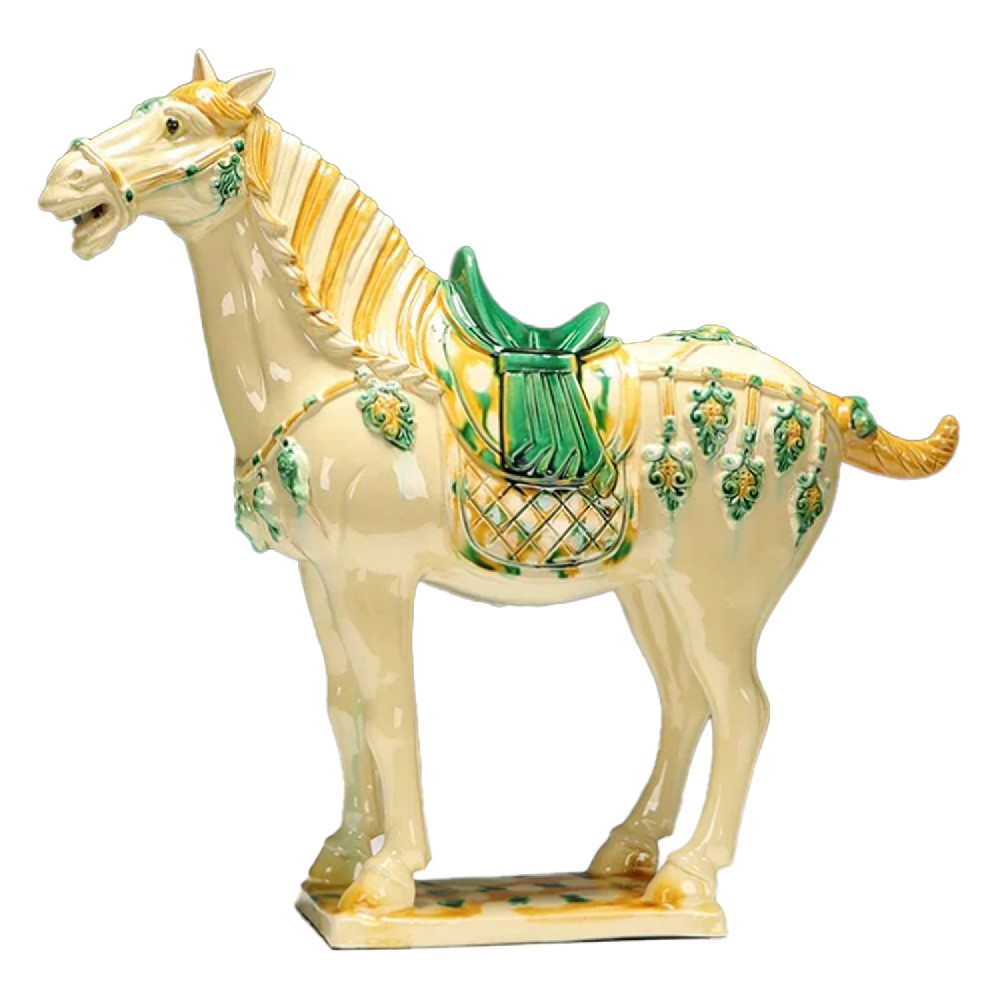
Tang Sancai (tri-colored glazed pottery of the Tang Dynasty) owes its enduring brilliance not only to its stunning glazes but also to an extremely sophisticated and rigorous production process. To truly appreciate this ancient ceramic wonder, we must begin at the very foundation: the selection and preparation of raw materials.
Step 1: Material Selection – The Importance of the Right Clay
The body of Tang Sancai is made from pottery clay, but not just any clay will do. Traditionally, Tang Sancai uses kaolin (also known as porcelain clay) and common clay from the Luoyang and Gongyi regions of Henan Province. These local clays possess several critical characteristics:
Moderate iron content: Too much iron would cause the fired body to darken; too little would compromise its strength.
Excellent plasticity: This allows artisans to perform fine shaping and carving.
Appropriate refractoriness: The clay can withstand the firing temperature of around 800°C without becoming excessively sintered.
Through generations of practice, ancient potters developed rich experience in selecting materials. High-quality clay was typically mined from layers 2–3 meters below the surface. After mining, it was piled in the open air to undergo natural weathering over the winter (commonly known as "freezing the clay"), which made the clay looser and more pure.
Step 2: Clay Preparation – Removing Impurities
Once selected, the raw clay must undergo a series of treatments to become a suitable molding material.
1. Crushing and Sieving
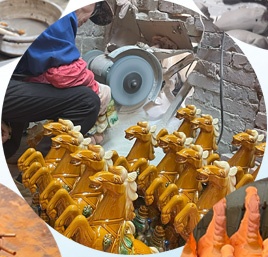
The weathered clay chunks are broken into small pieces and passed through two sieves: a coarse sieve (40 mesh) and a fine sieve (80–100 mesh). This removes impurities such as stones and plant roots. The resulting clay powder is as fine as flour.
2. Washing and Sedimentation
The clay powder is poured into a water tank and stirred. The principle of gravity sedimentation is used for分级. Coarse sand settles first and is discarded; the fine clay slurry in the middle is transferred to a sedimentation tank; and the clear water at the top is drained away. This process is repeated 2–3 times until the slurry becomes extremely fine.
3. Filter-Pressing and Aging
The settled slurry is poured into cloth bags and pressed with heavy weights to remove excess water, yielding raw clay with a moisture content of about 20–25%. This raw clay is then placed in earthenware jars inside a cellar and covered with a damp cloth for "aging" (also known as "clay ripening"), typically lasting 3–6 months. During aging, organic matter in the clay ferments and decomposes, and the action of bacteria and microorganisms makes the clay more uniform, dense, and plastic.
4. Wedging the Clay
After aging, the artisan repeatedly kneads and slams the clay to further expel air bubbles and ensure a uniform distribution of moisture and particles. Well-wedged clay feels flexible and smooth to the touch, with no cracks or air pockets, and is finally ready for the shaping process.