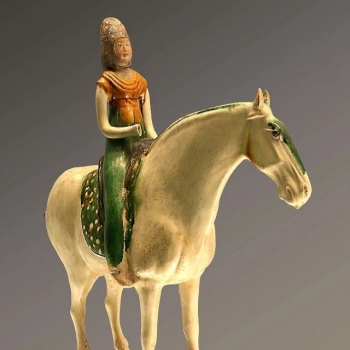
The Evolution of an Ancient Art: The Modern Development of Tang Sancai
Abstract: While rooted in the glorious tradition of the Tang Dynasty
(618-907 AD), Tang Sancai is not a relic confined to museums. This
article explores its dynamic evolution into the modern era, tracing its
journey from a funerary art to a celebrated form of contemporary
artistic expression. It examines the technological innovations, artistic
liberation, and shifting cultural roles that have defined modern Tang
Sancai, ensuring its relevance in the 21st century.
1. Introduction: From Museum to Living Room
The
modern rebirth of this art form began in the 20th century, sparked by
archaeological discoveries and a renewed interest in cultural heritage.
Today, it has undergone a fundamental transformation: from an object for
the dead to an object for the living. Modern Tang Sancai pieces are no
longer buried but displayed in homes and galleries worldwide,
appreciated for their vibrant beauty and deep cultural significance.
2. Technical and Material Innovations
Modern artisans have preserved the core spirit of Tang Sancai while
embracing advancements that enhance quality, durability, and creative
potential.
Refined Clay and Purification: While traditional
kilns used locally sourced clays, modern studios often use more refined
and consistently purified clay bodies. This reduces impurities and
allows for greater control over the final product, resulting in finer
details and fewer firing defects.
Scientific Control of the Kiln:
The most significant technological shift is the move from ancient,
unpredictable wood-fired dragon kilns to modern electric or gas kilns.
Precision: Digital controls allow artisans to precisely manage
the temperature curve and atmosphere during both the biscuit and glaze
firings. This reproducibility reduces the high failure rate of the past.
Experimentation: Controlled environments allow for safer and
more systematic experimentation with new glaze formulas and firing
schedules.
Advancements in Glaze Chemistry: The palette of modern Tang Sancai has expanded dramatically.
New Colors: Artists now incorporate a wider range of metal
oxides to create previously rare or impossible colors, such as more
stable and vibrant blues, pinks, and bright yellows.
Improved
Lead-Free Glazes: Addressing concerns about lead toxicity in
traditional formulas, many modern artisans have developed and adopted
lead-free glaze alternatives. These safer glazes make the art form more
accessible and suitable for functional items like tableware.
3. Evolution of Form and Subject Matter
This is where modern Tang Sancai has most visibly broken from
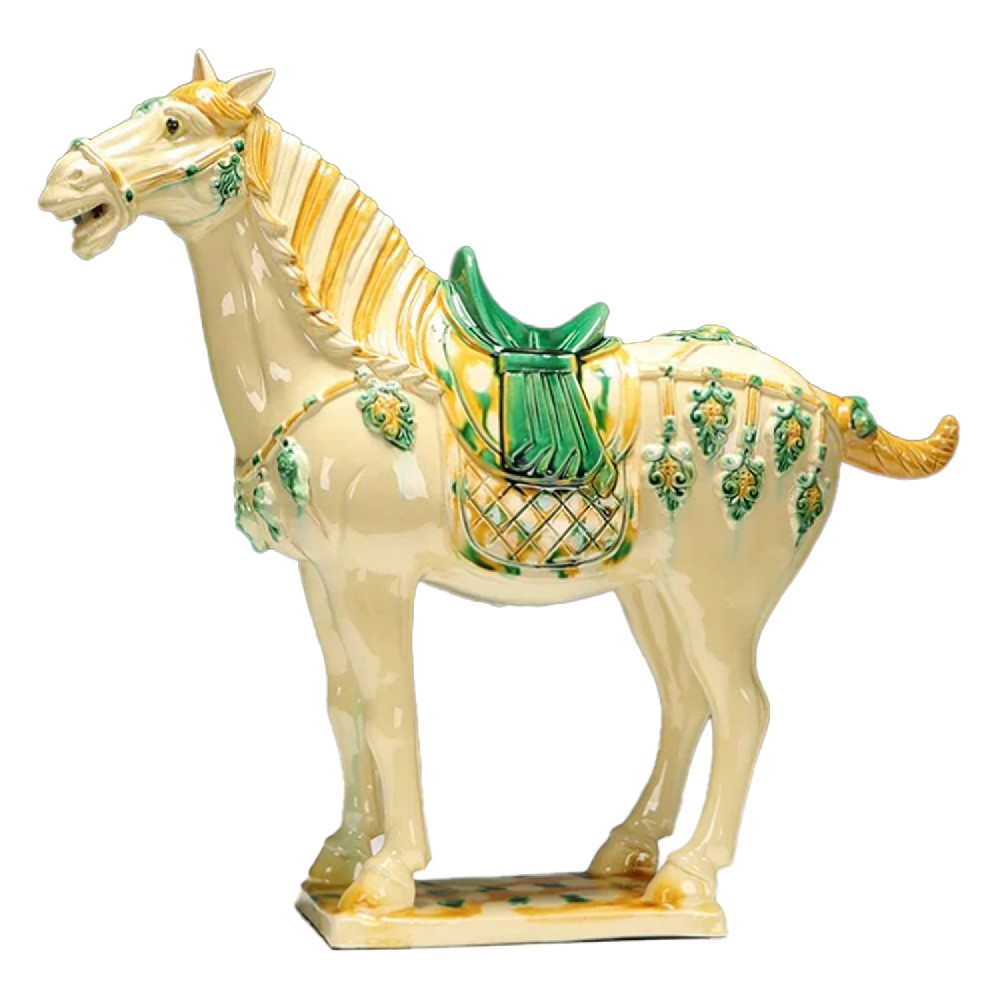
tradition. While classic horses and camels remain popular, contemporary
artists have vastly expanded the repertoire.
Abstract and
Sculptural Forms: Moving beyond figurative representation, many artists
now create abstract sculptures where the flow of the glaze itself is the
primary subject, exploring texture, color, and form in a modern idiom.
New Themes and Motifs: Subjects now include modern animals, human
figures in contemporary dress, and interpretations of global themes.
This reflects a dialogue between traditional technique and a
contemporary worldview.
Functional Art and Décor: A major
development is the application of Tang Sancai techniques to functional
and decorative objects. This includes:
Vases and bowls
Wall tiles and panels
Jewelry and small ornaments
Modern interpretations of classic forms designed to complement contemporary interior design.
4. The Duel Identity: Cultural Icon and Contemporary Art
Modern Tang Sancai holds a unique dual identity:
Preservation of Intangible Cultural Heritage: In 2008, the firing
technique of Tang Sancai was listed as part of China's National
Intangible Cultural Heritage. This recognition has led to state support
for master artisans, ensuring that the ancient methods are preserved and
passed on to new generations.
The Artist's Personal Expression:
Unlike anonymous ancient potters, modern Tang Sancai artists are often
recognized as individual creators. They sign their work and use the
medium as a platform for personal artistic expression, blending
traditional aesthetics with their own unique style.
5. Conclusion: A Living Tradition
The story of Tang Sancai did not end with the Tang Dynasty. Its journey
into the modern age is a testament to its enduring power and
adaptability. Through a combination of technical innovation, artistic
expansion, and a renewed sense of cultural purpose, modern Tang Sancai
has successfully transcended its ancient origins. It is no longer just a
window into a glorious past but a vibrant, living art form that
continues to evolve, captivating a global audience with its unique blend
of ancient splendor and modern sensibility.