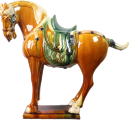
Every Wemings piece begins as an idea about a horse, a camel or a figure from the Tang dynasty — and ends, weeks later, as a glazed and signed object lifted out of the kiln. This is the workshop behind that journey: how we design, how we build, and how the three colours of sancai are persuaded to run together.
Inside the workshop
Wemings works out of a small studio in Shenzhen, Guangdong, where a team of ceramic artists and modellers makes Tang Sancai the traditional way: built and finished by hand, glazed by hand, and fired twice. We are a workshop rather than a production line. Design, modelling, glazing and firing happen under one roof, and nothing is dispatched until it has been inspected piece by piece.
Because the work is manual, our output is limited. We release pieces in small runs rather than by the container load, and designs are retired when we can no longer make them properly.
From design to finished piece
A single object passes through ten stages. Some take an afternoon; others take weeks of testing before we are willing to commit a finished piece to the kiln. Here is the whole sequence, in the order it happens.
Stage 1 Research & reference
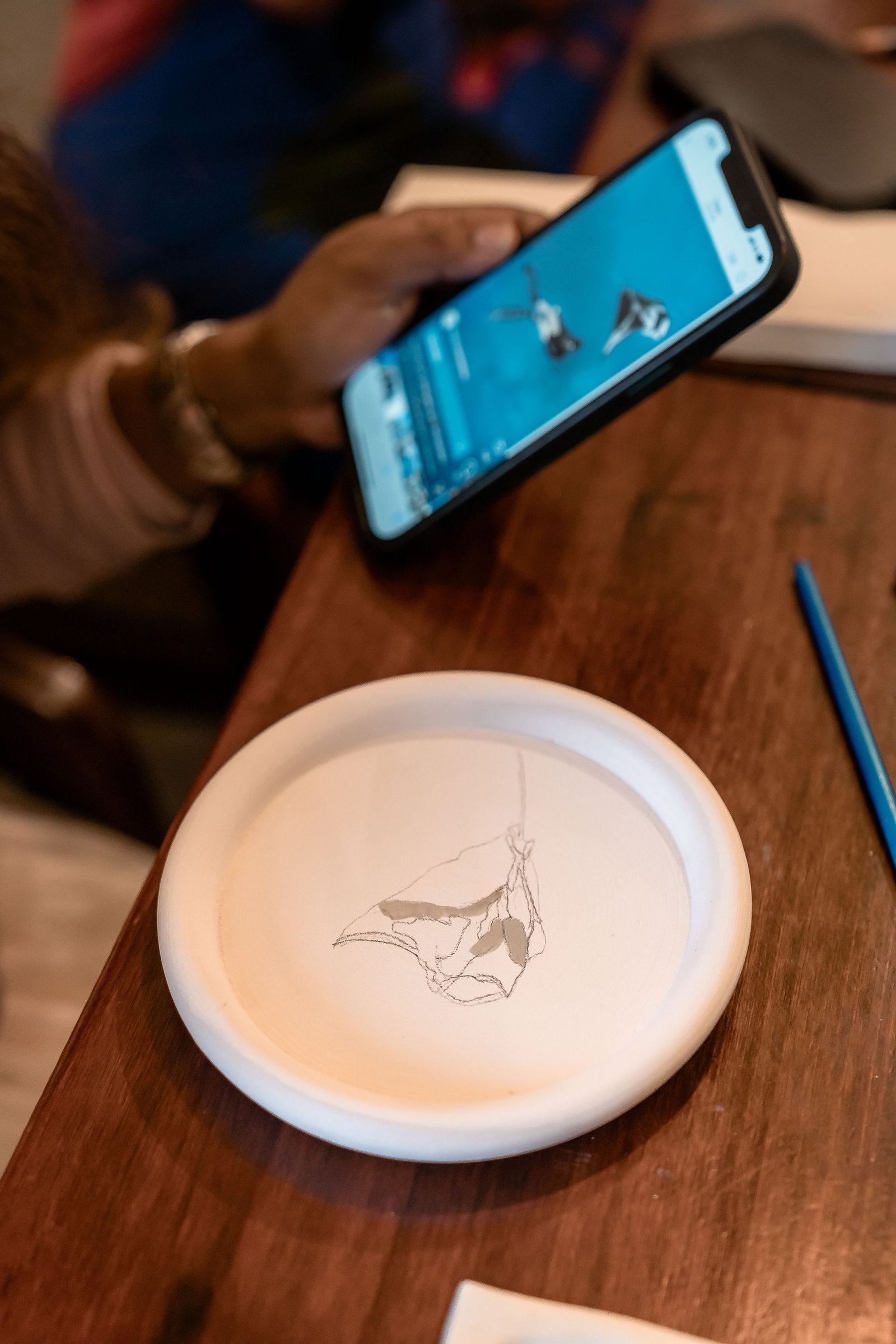
Every new design starts with the historical record. We study Tang-dynasty originals — horses, camels, court figures and vessels — in museum collections and published catalogues, and look closely at how the originals were proportioned, where the glaze was allowed to pool, and which colour combinations were actually used. That research is what decides the stance, the mass and the palette of the piece we are about to make.
Stage 2 Drawing the form
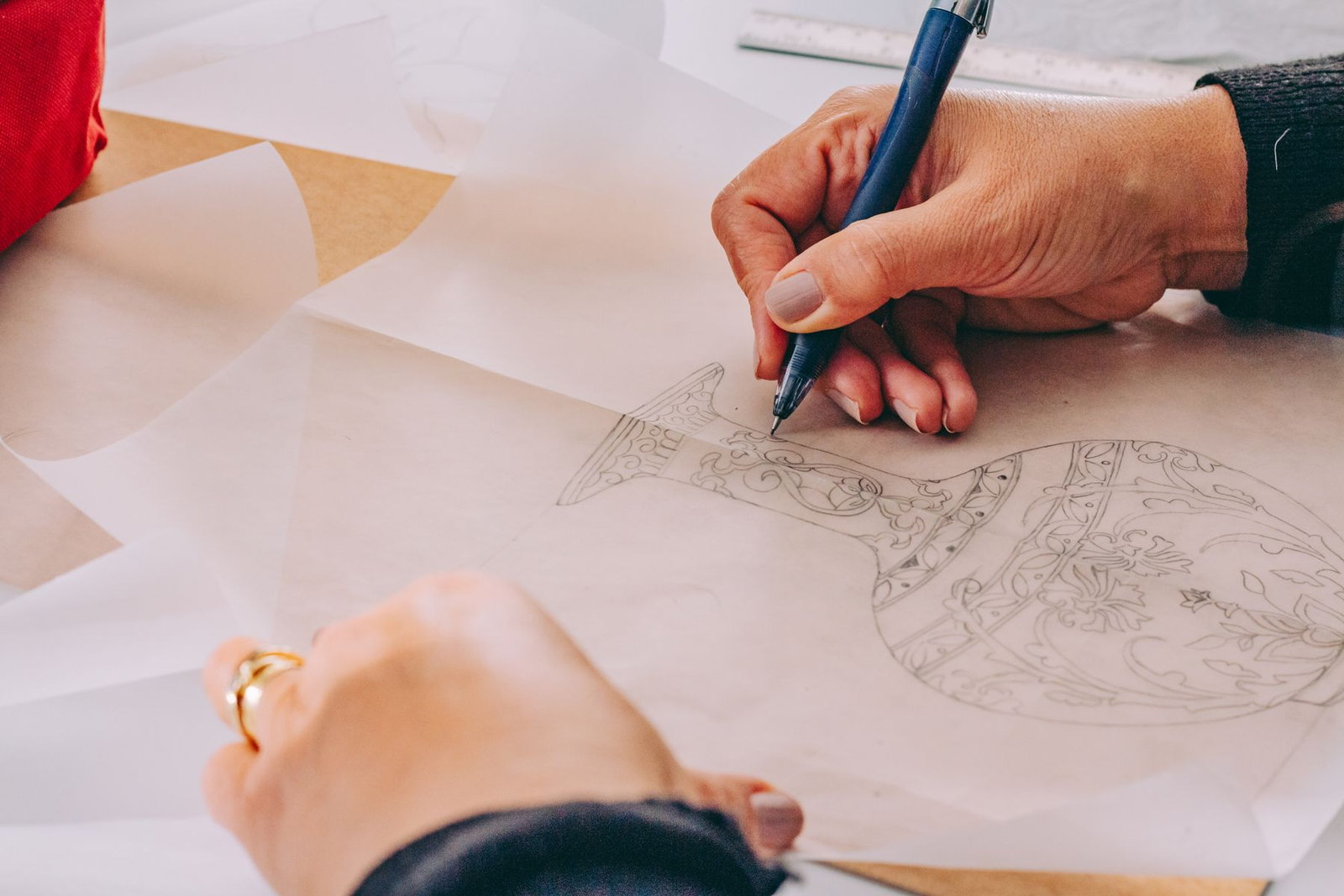
The chosen idea is drawn — first as loose sketches, then as a dimensional drawing that fixes the height, the stance and the balance of the piece. The pattern for the painted areas is worked out at the same time, because on a sancai piece the decoration and the three-dimensional form have to agree: a motif placed a centimetre too low will read differently once the glaze has run.
Stage 3 Clay body and test pieces
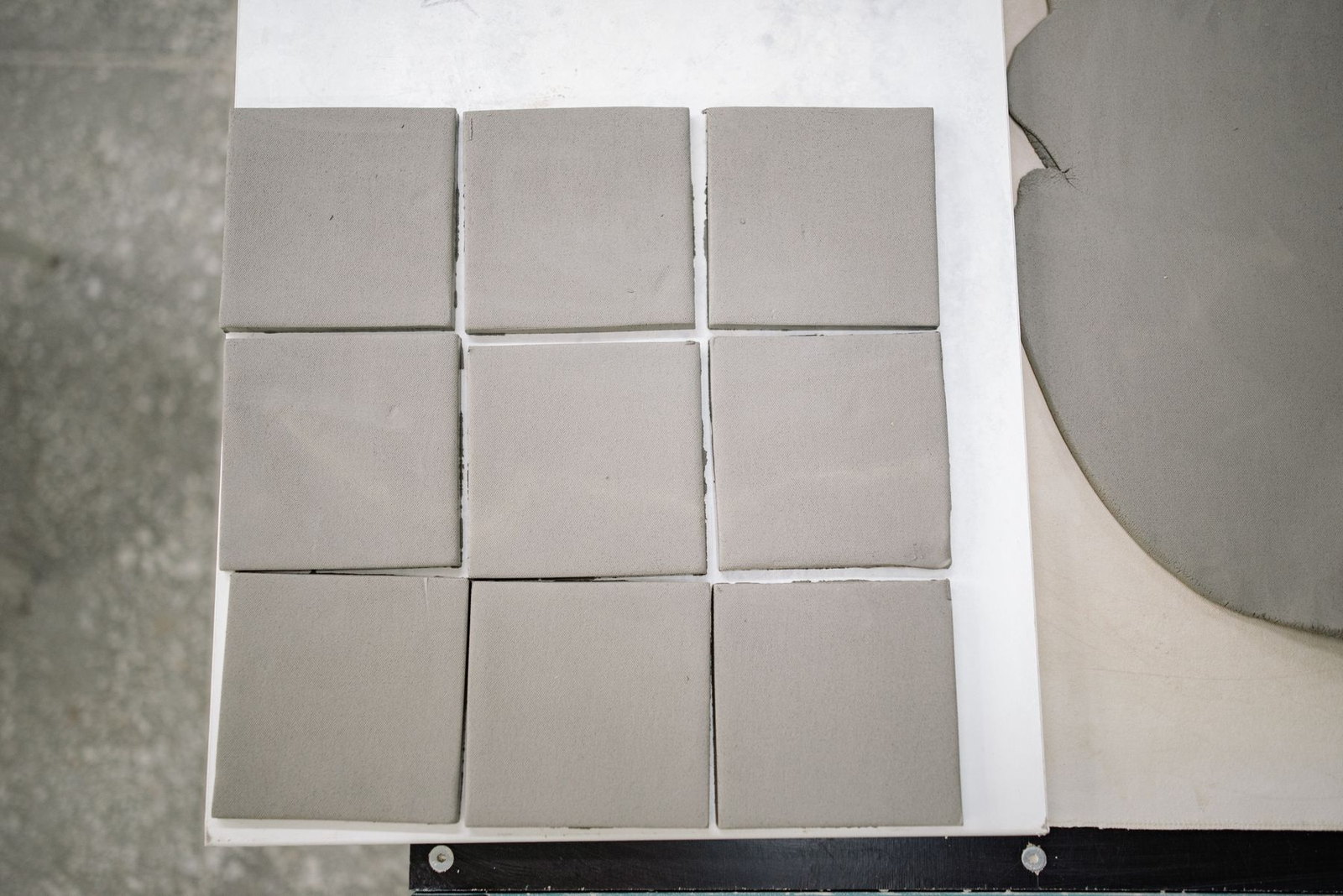
Not every clay suits a piece of this shape and this weight. We prepare the body, wedge it to work out air pockets, and cut test slabs so the clay can be judged for workability, shrinkage and the way it behaves under glaze. Settling the clay first is what keeps a good model from cracking in the kiln later.
Stage 4 Modelling the prototype
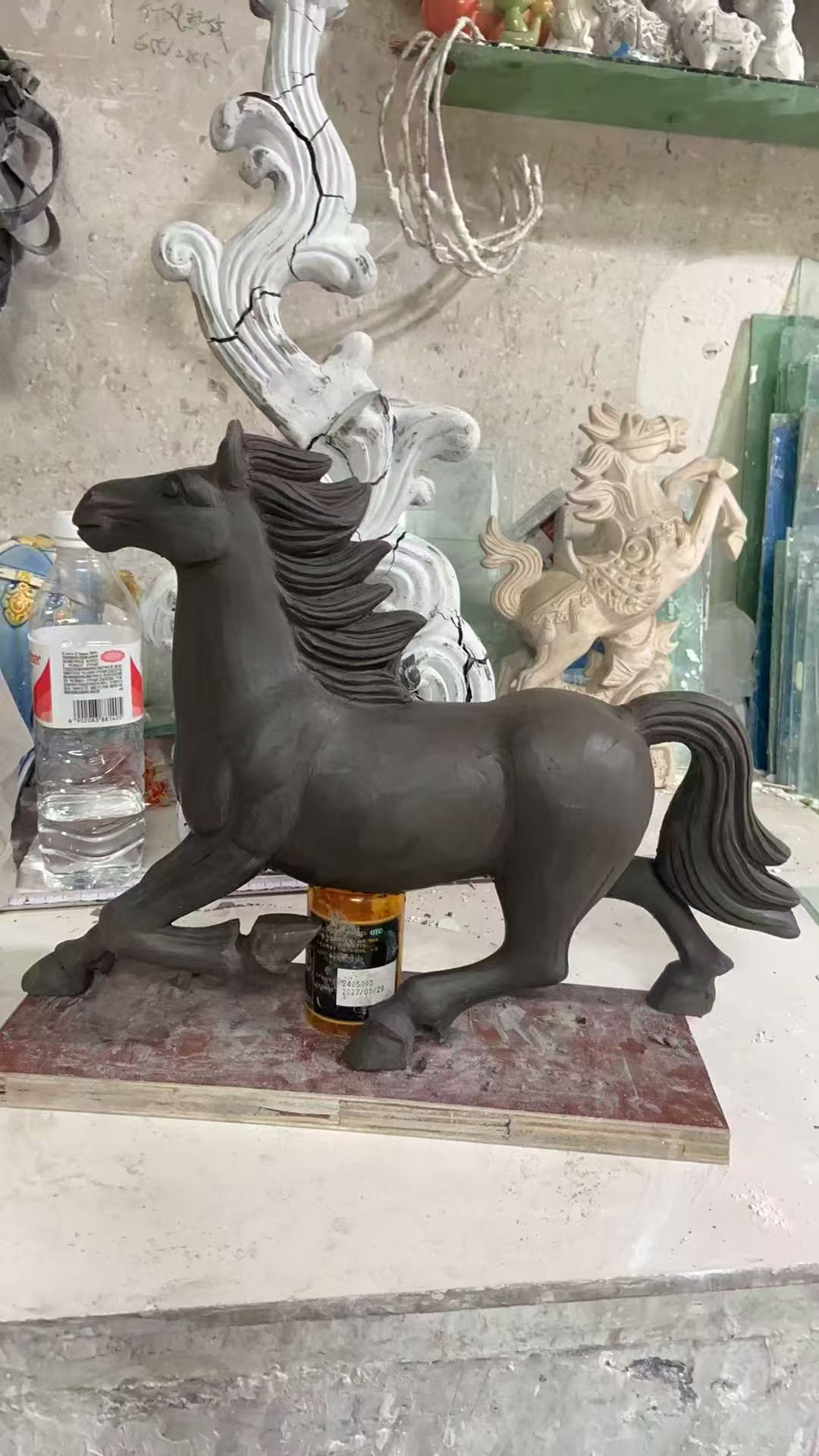
The first model is built by hand. Clay is added, taken away and re-shaped until the silhouette matches the drawing from every angle, then the model is set aside to dry slowly. Most designs need two or three prototypes before the pose reads correctly; the rejected ones are kept on the shelf, because a failure at this stage costs a few days while a failure in the kiln costs a finished piece.
Stage 5 Glaze development
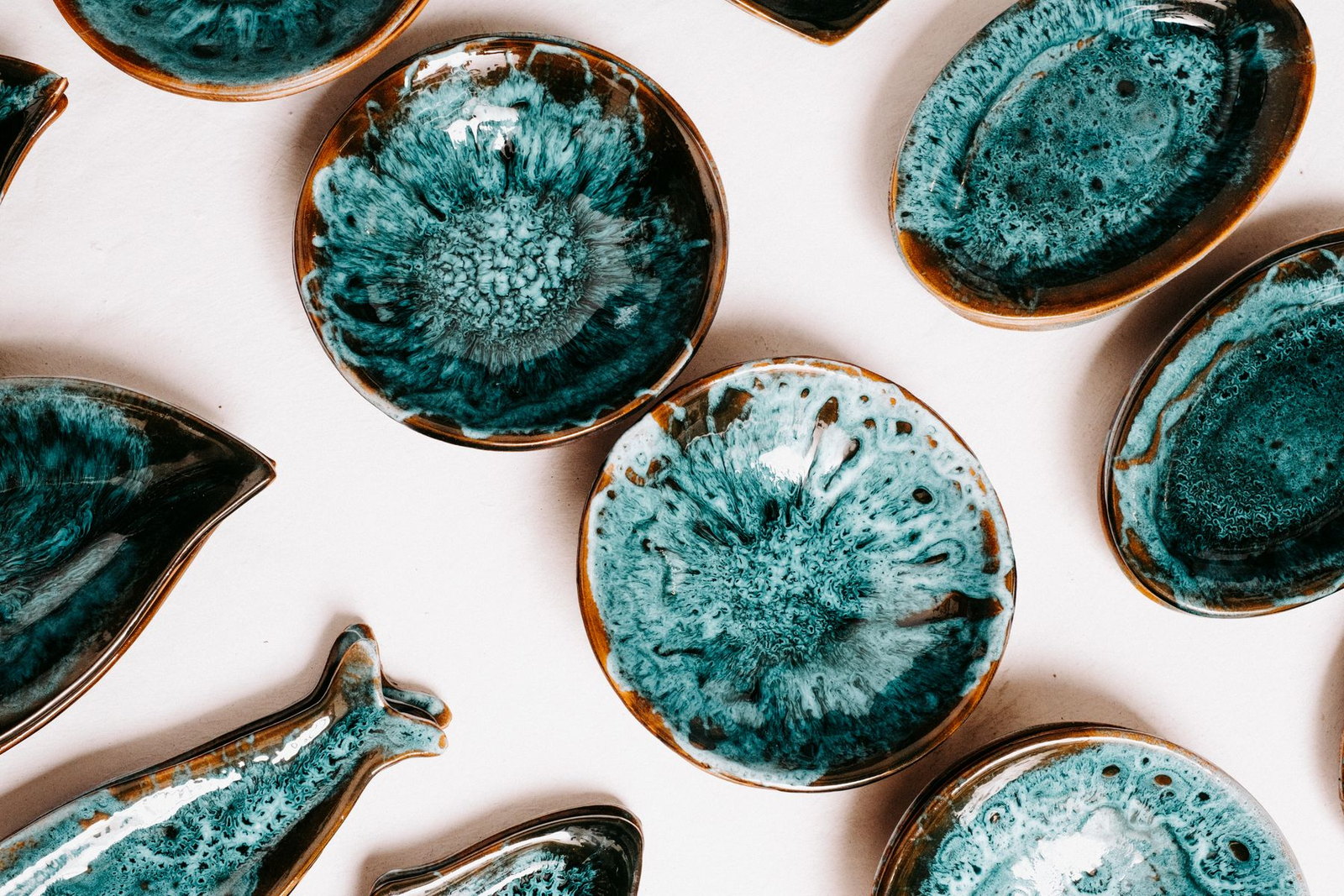
Amber, green and cream are only three colours, but the character of a sancai piece lives in how they are layered and how far they are allowed to run. We mix and test glaze recipes continuously, fire them on sample pieces, and keep a record of every batch: which recipe, which firing, what result. A new tone can take weeks of trials before it earns a place on a finished piece.
Stage 6 Hand-building and refining
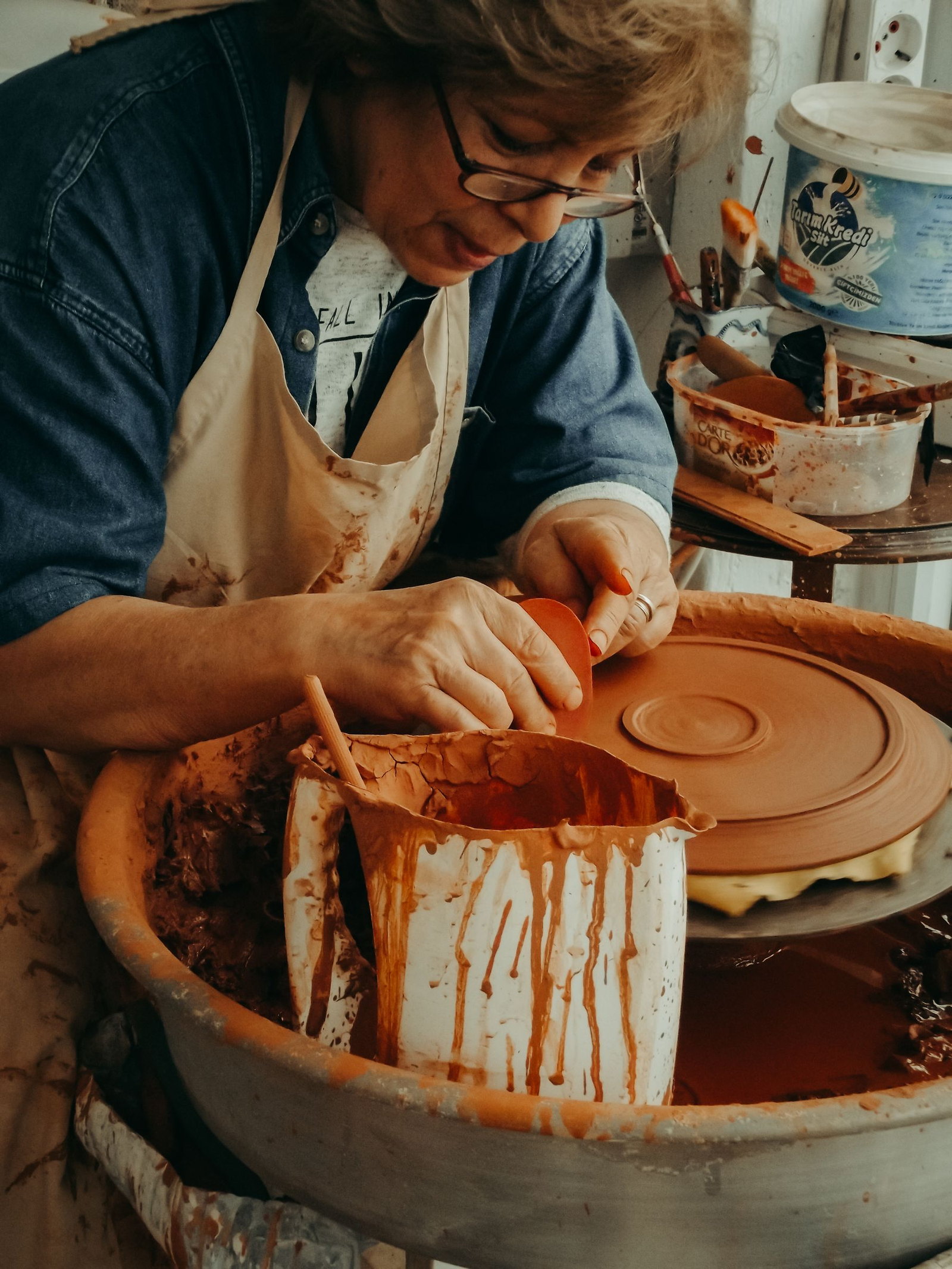
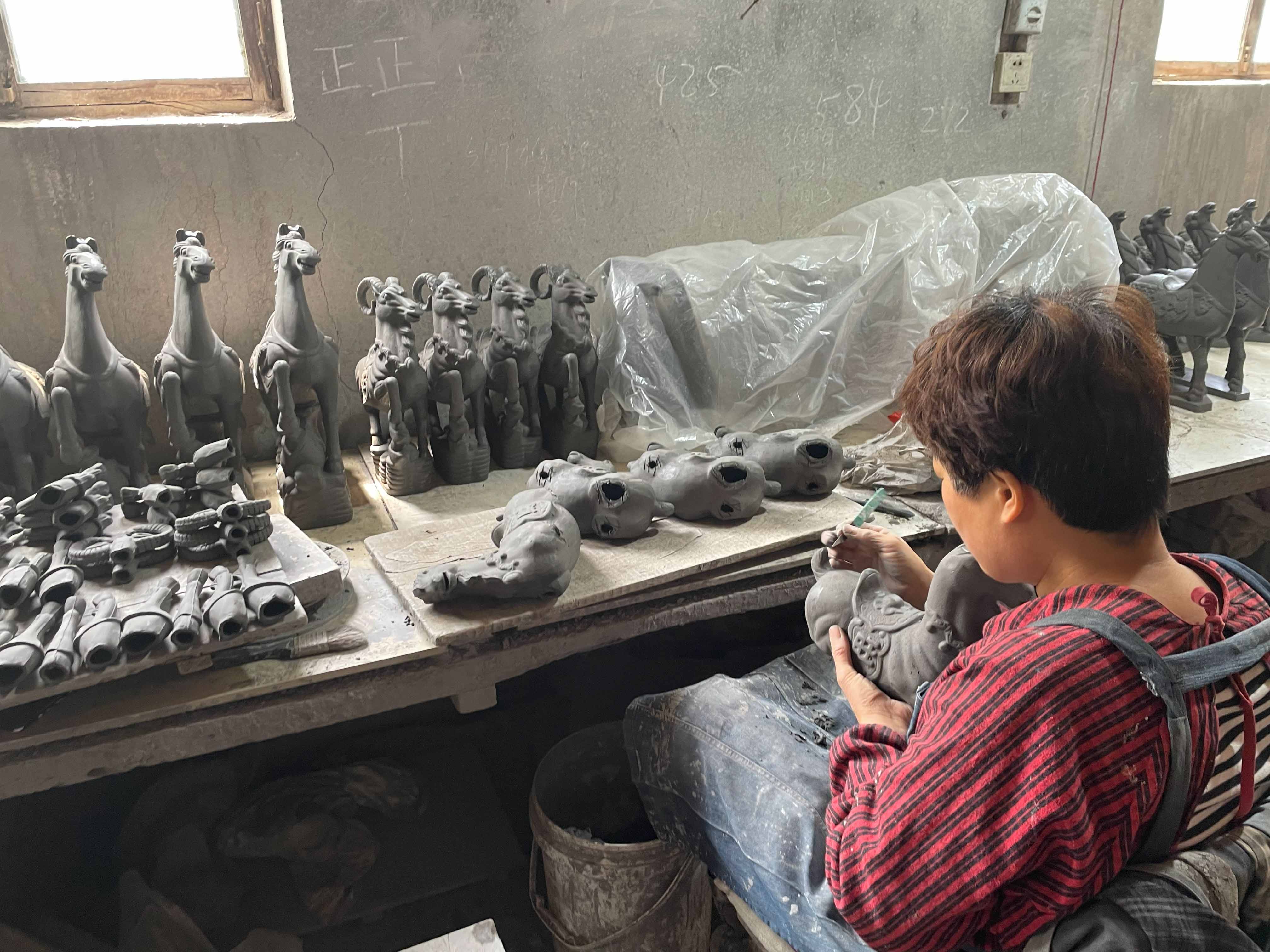
With the design, the clay and the glaze all settled, the piece is built. Everything is shaped and finished by hand: joints are reinforced, the surface is smoothed down, and where the form calls for it, details such as harness, mane or drapery are added individually. This is the slowest part of the process and the part that cannot be hurried — clay remembers every shortcut.
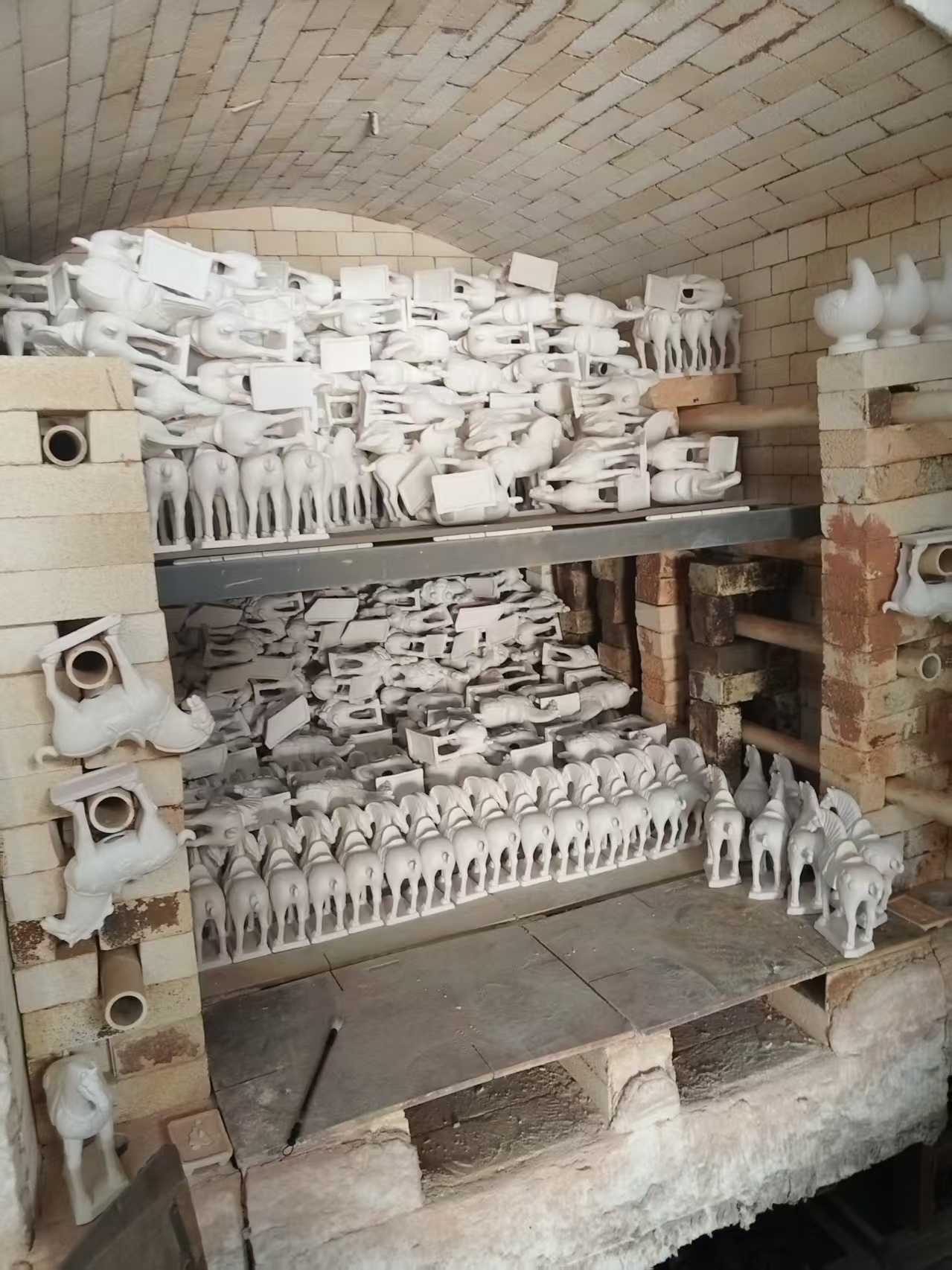
Stage 7 The bisque firing
The finished piece is left to dry completely and then fired for the first time — the bisque firing — which hardens the body, burns out organic matter and leaves a porous surface that will accept glaze. Pieces go up slowly and come down slowly; an impatient rise or a rushed cool is the most common way to lose a model that took a week to build.
Stage 8 Glazing and hand-painting
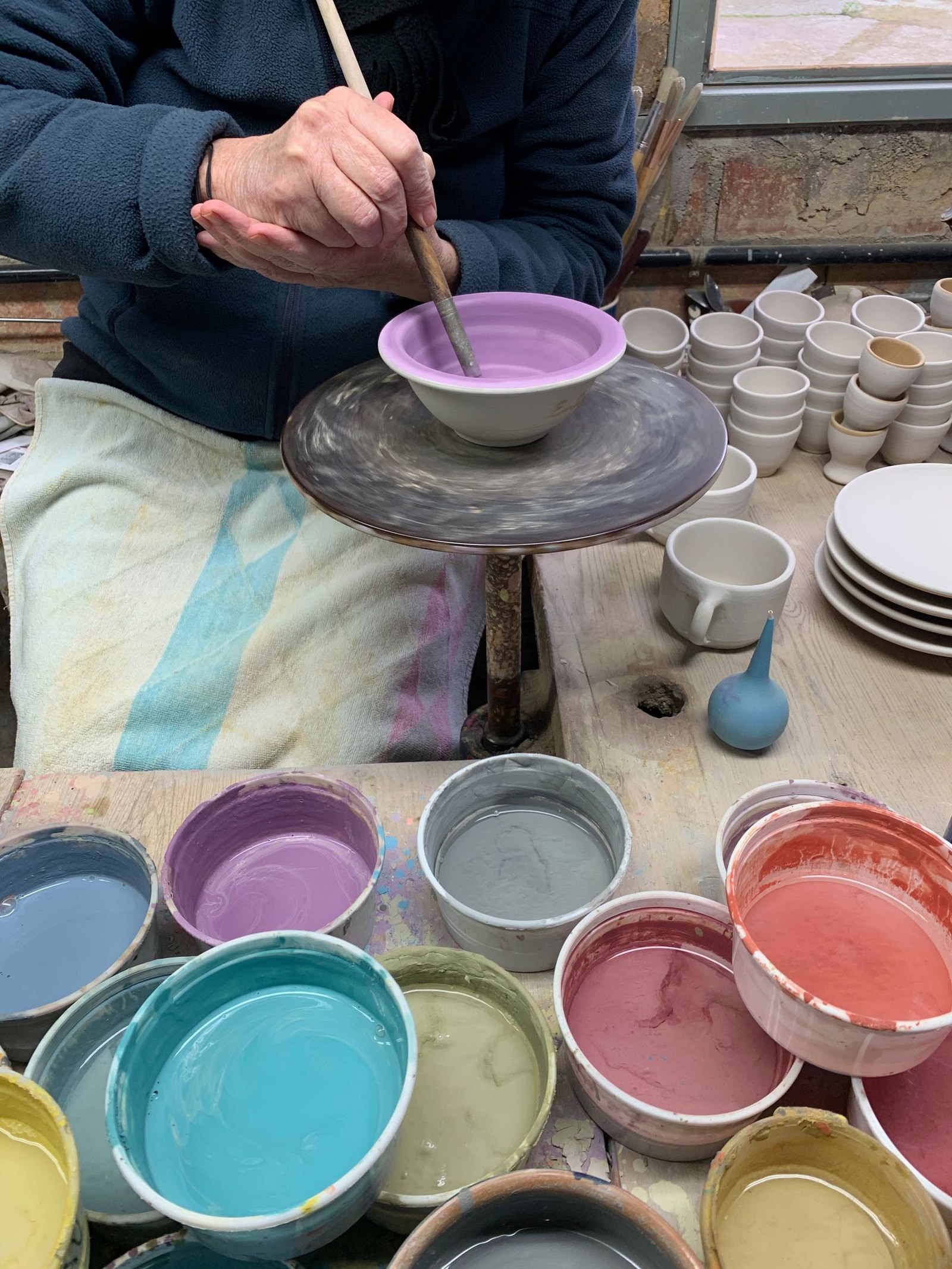
Glaze is applied by hand — dipped, poured or brushed depending on the surface — and the painted areas are worked in while the glaze is still settling. Because the colours move during firing, applying them is partly a matter of experience: the amber that looks flat on the raw piece will deepen, the green will run into it, and the cream will break across the ridges of the modelling.
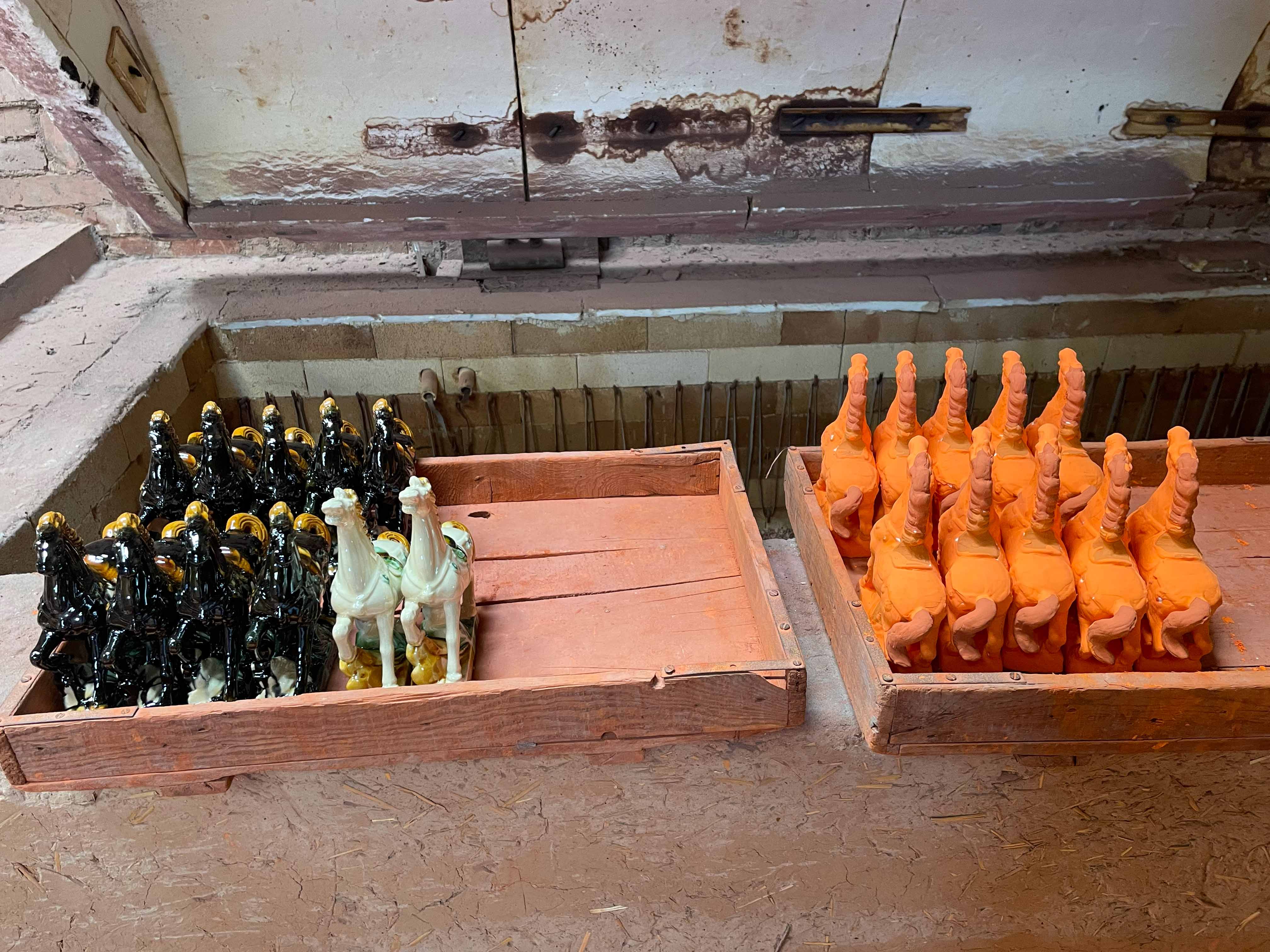
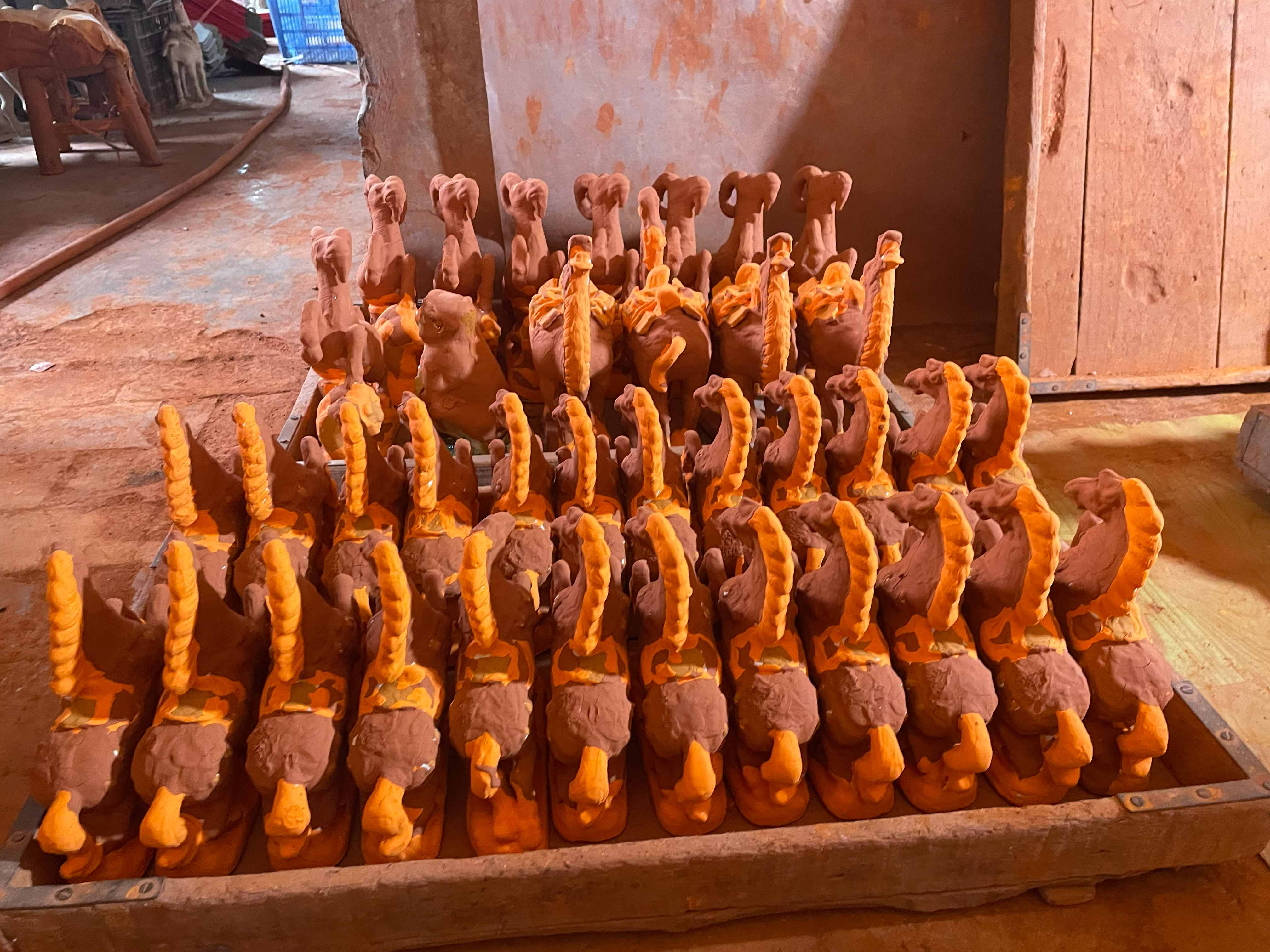
Stage 9 The glaze firing
The second firing, at a lower temperature, is where the piece becomes a sancai object. The glaze melts, runs and pools, and the three colours meet and spread into one another. It is also the least predictable stage, because the kiln has the last word: two pieces from the same model, glazed from the same batch and fired side by side will still come out as two different objects.
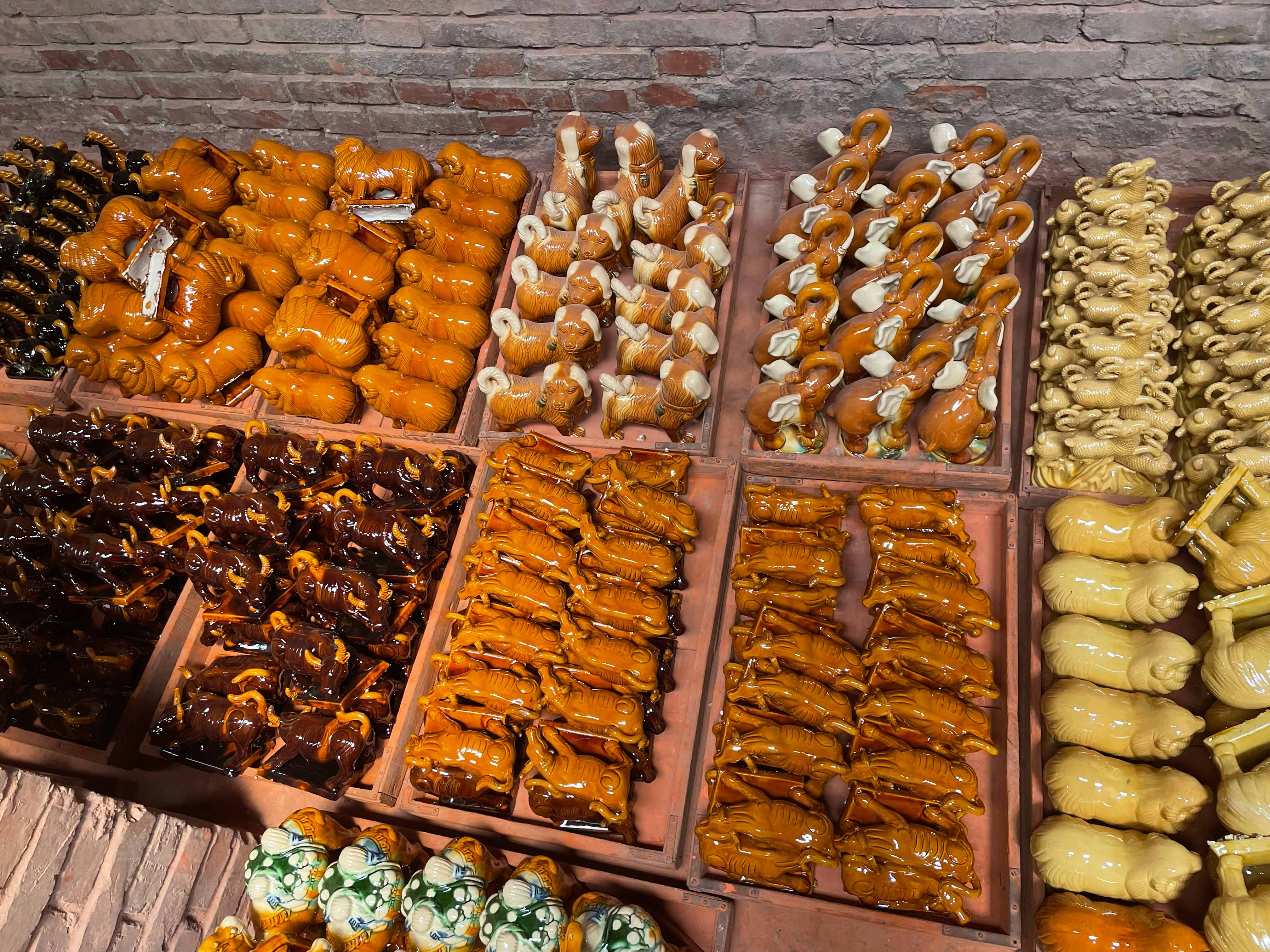
Stage 10 Finishing, signing and dispatch
Once the kiln has cooled, every piece is inspected: the glaze is checked for defects, the base is cleaned and dressed, and the piece is weighed and measured against its specification. Pieces that pass are numbered, signed and issued with a certificate of authenticity. Then they are packed by hand in protective materials chosen for the journey, which is often to the other side of the world.
About kiln variation. Sancai glaze is not a printed finish, and it is not meant to be. Slight differences in colour depth, in the direction the glaze runs and in where the three colours meet are the normal, expected result of the process — they are what makes each piece an individual object rather than a copy of the one next to it.
What this means for you
- Made by hand, in small runs — we do not mass-produce, so availability is limited and designs retire.
- Signed, numbered and certified — limited pieces carry an edition number and a certificate of authenticity.
- Packed for travel — protective packing adapted to each piece, with tracking on every shipment.
- Buying for a project, a gallery or a store? We take on commissions and trade orders, working from your brief or from our own archive.
To see what this process produces, start with the collection. For commissions, specification sheets or a workshop enquiry, contact us with a short description of what you need.